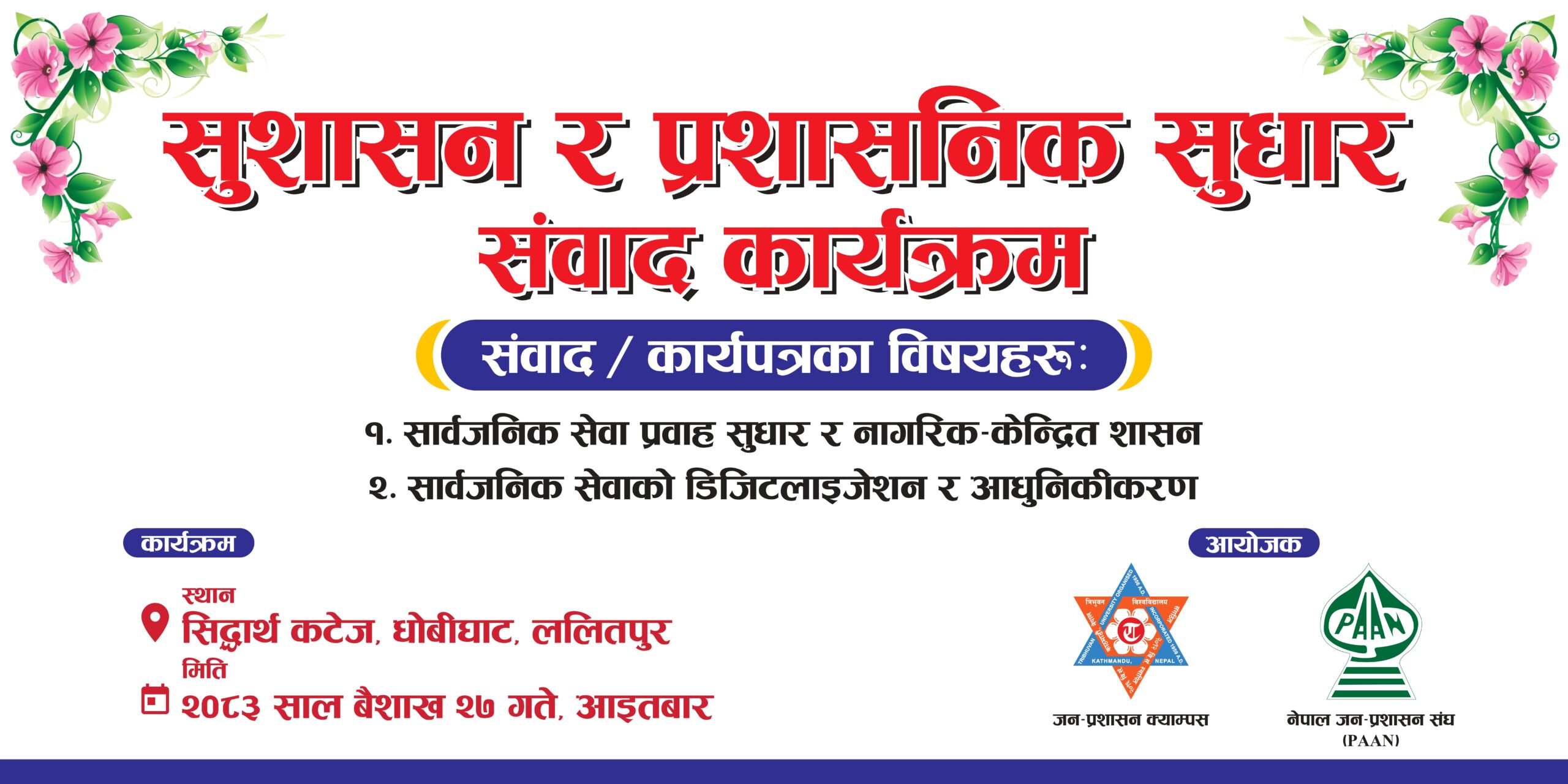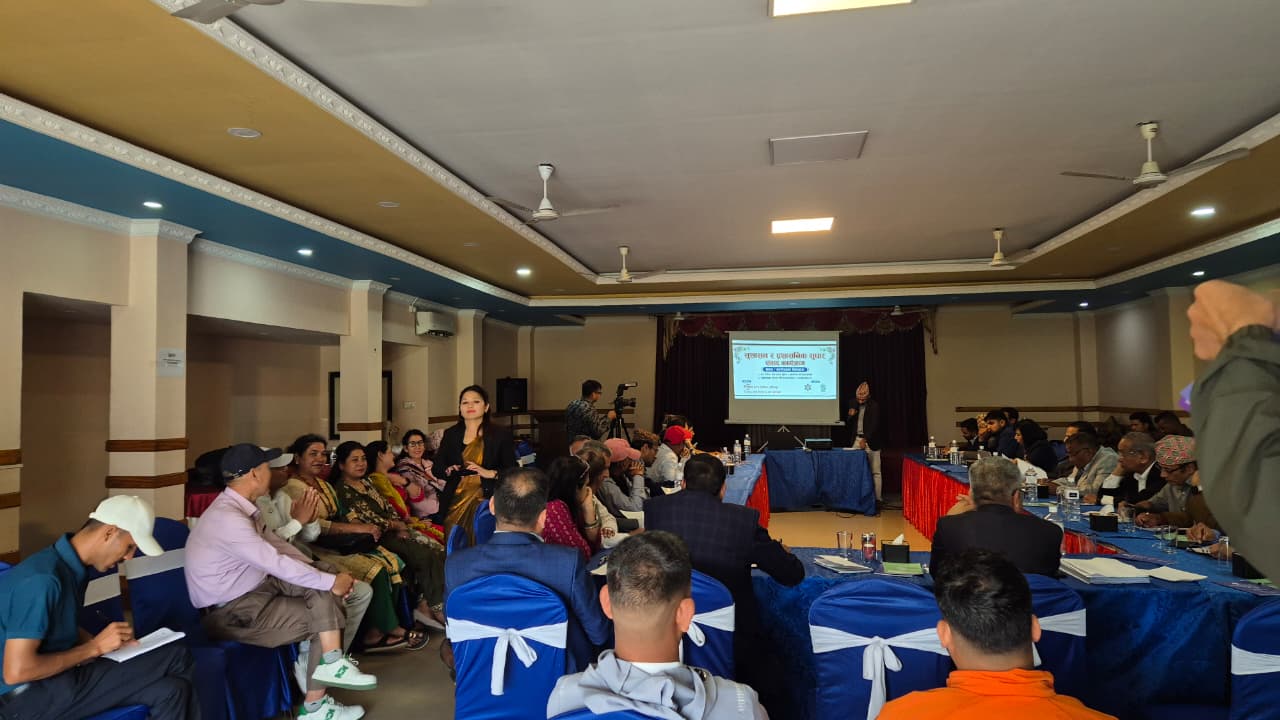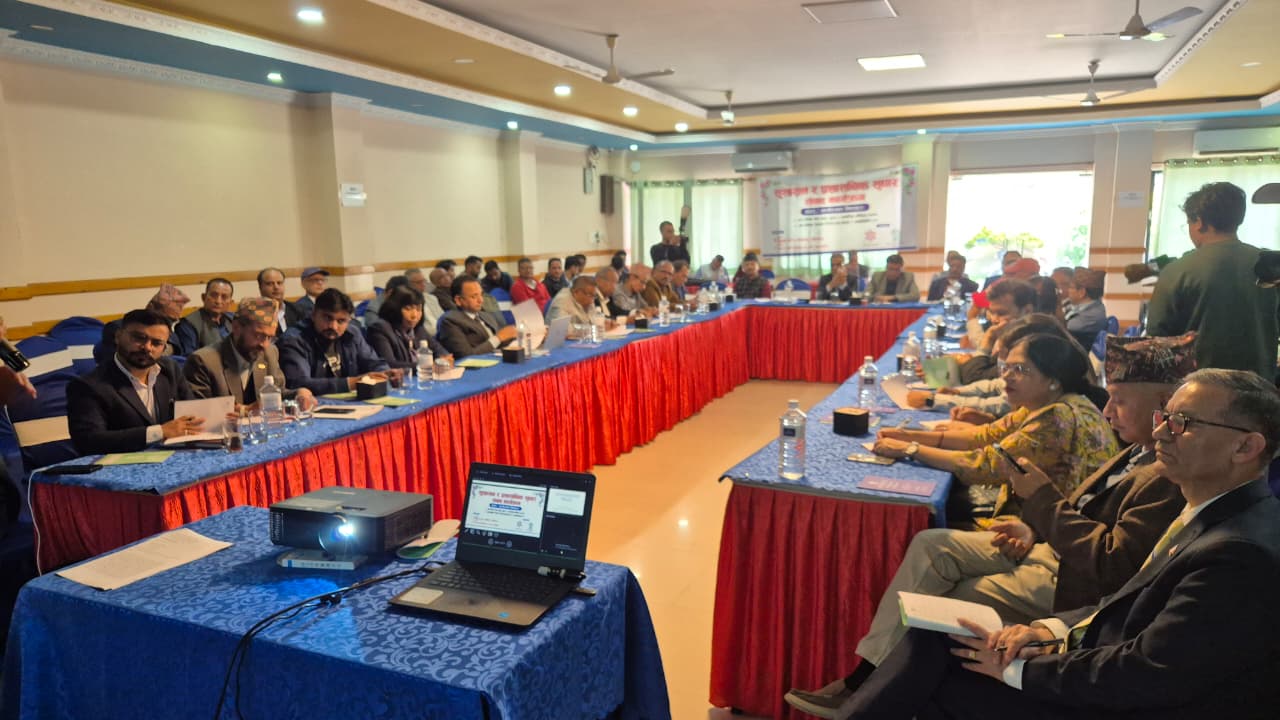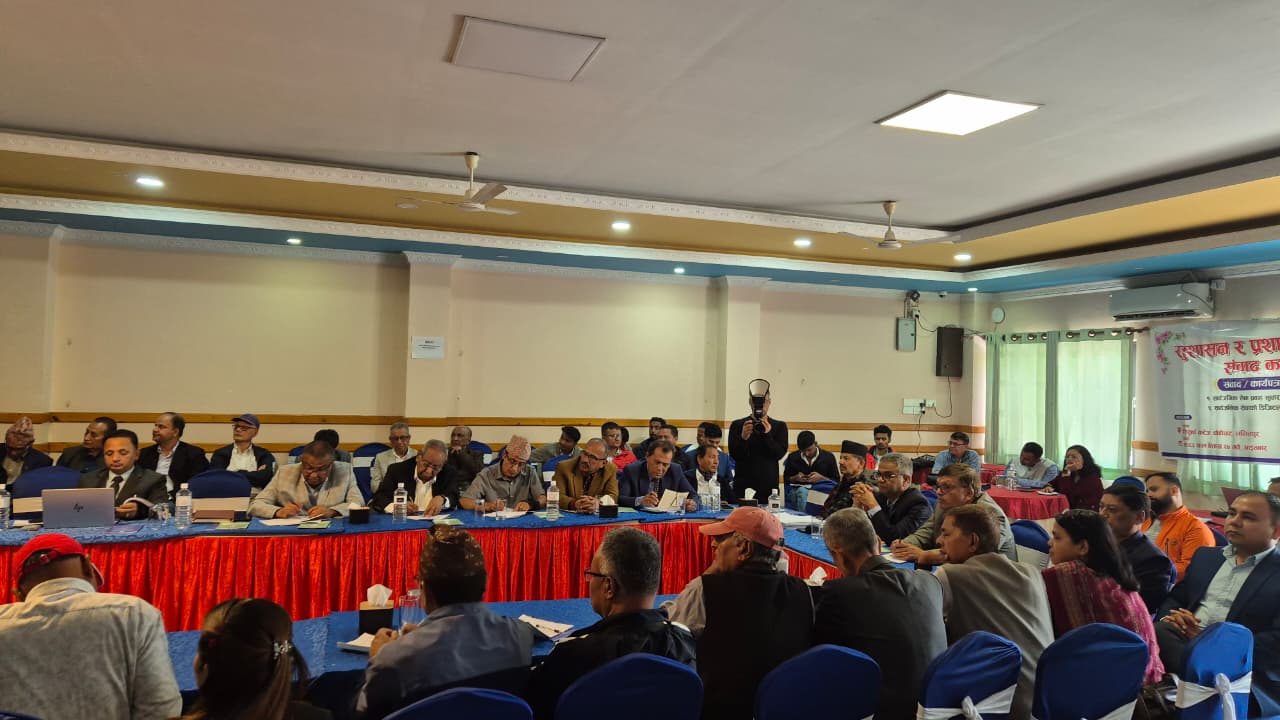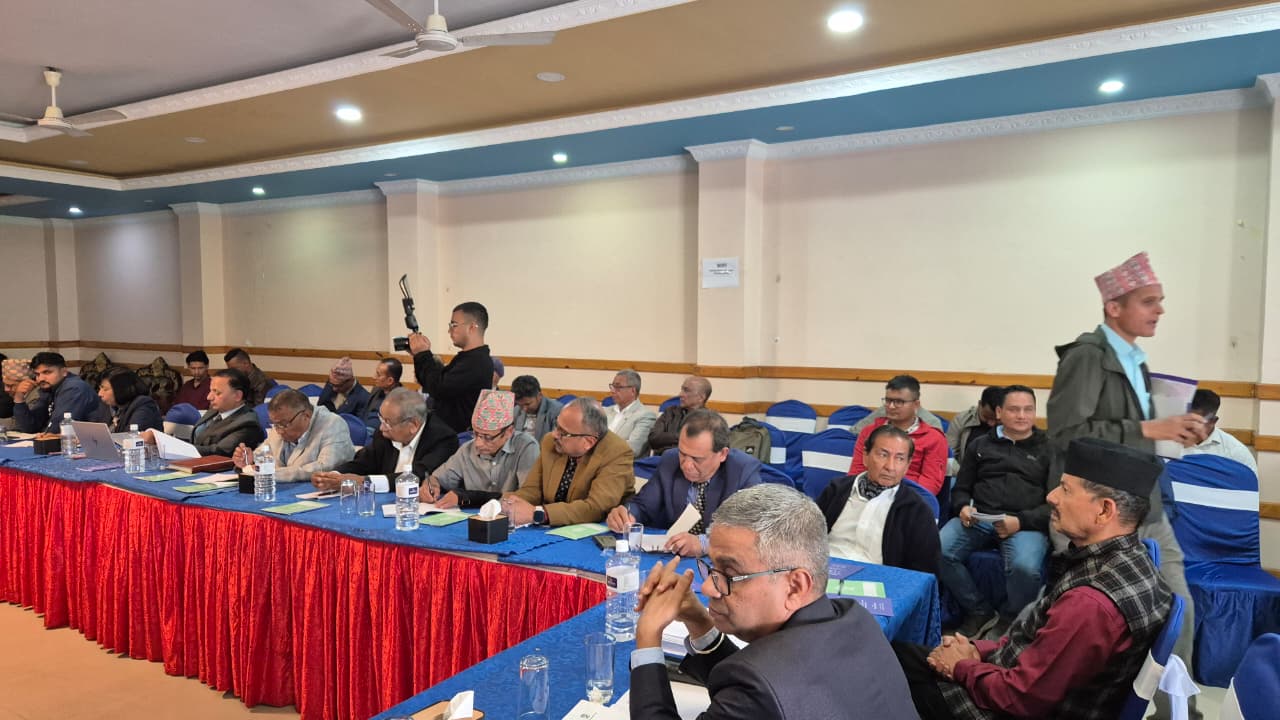
The “Governance and Administrative Reform Dialogue Program” was successfully held on Baisakh 27, 2083(10th May 2026),
, at Siddhartha Cottage, Lalitpur, jointly organized by the Nepal Public Administration Association (PAAN) and Public Administration Campus (PAC). The program featured in-depth discussions on public service delivery reform, citizen-centered administration, and the digitization and modernization of public services.
In the first session, a working paper entitled “Public Service Delivery Reform and Citizen-Centered Administration” was presented by Mr. Krishna Hari Baskota, former President of PAAN. The paper was commented upon by Mr. Keshav Pandey and Mr. Hemraj Aryal. During the discussion, emphasis was placed on the need for improvements in administrative structures, procedures, and behavior in order to make public service delivery more effective, transparent, accountable, and citizen-friendly.
In the second session, Mr. Bibhusan Bista presented a working paper on “Digitization and Modernization of Public Services.” The paper highlighted the current state of digital governance in Nepal, service integration, data management, business process reengineering (BPR), and governance transformation. The paper was discussed by Mr. Subhas Khadka and Prof. Dr. Shreekrishna Shrestha.
The program witnessed the active participation of scholars, professors, and experienced professionals from the administrative sector. Prof. Dr. Prachanda Man Pradhan stressed the importance of coordination between theoretical and practical aspects and emphasized practical training and capacity enhancement for administrative reform. Similarly, Prof. Dr. Tek Nath Dhakal remarked that mechanisms such as citizen charters have not been effectively implemented in practice and should not remain mere formalities but rather be made service-recipient friendly.
Likewise, Mr. Lakhanlal Sah highlighted the need to provide training and capacity-building opportunities to non-officer frontline staff involved in service delivery. Dr. Rohit Shrestha emphasized that the administration should become more action-oriented and bring changes in service delivery through practical reforms.
Program Coordinator and General Secretary of Nepal Public Administration Association, Dr. Dilip Raj Paudel, stated that Nepal must clearly define whether it seeks only incremental improvements or a paradigm shift in governance transformation. He remarked that while the government is moving ahead in a “commando style” speed, administrative structures are still functioning at a slow, “tortoise pace,” making structural and behavioral reforms essential for meaningful transformation.
He further pointed out that inconsistencies in personal identification details across citizenship certificates, national identity cards, PAN records, passports, bank accounts, and mobile registrations are creating challenges for data integration and automation in digital service systems. He also emphasized the importance of data accuracy, data protection, and digital literacy for fully digitizing public services. Furthermore, he suggested establishing help desks in every office to facilitate citizens in using online systems effectively.
The first session of the program was moderated by Mr. Subas Sharma, while the second session was moderated by Mr. Madhuram Acharya.
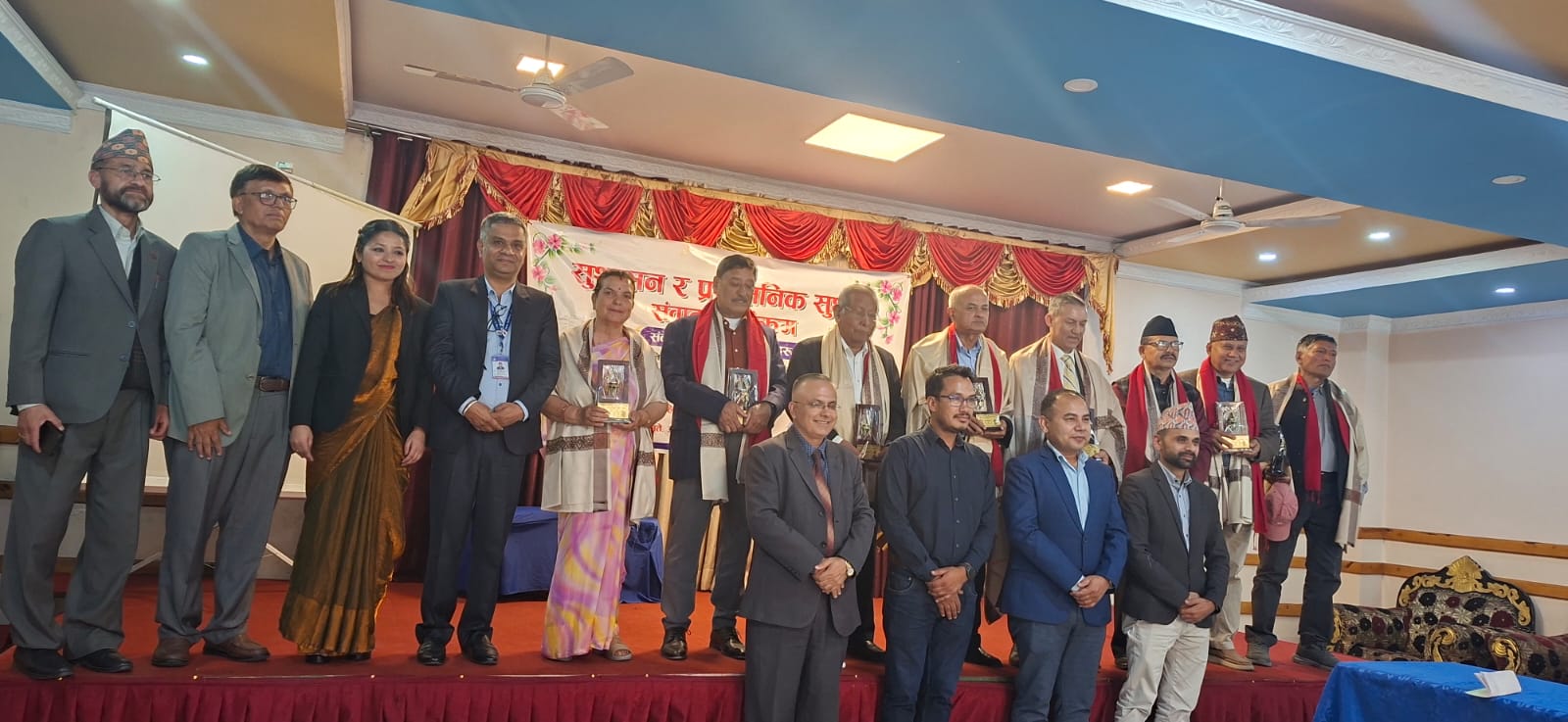
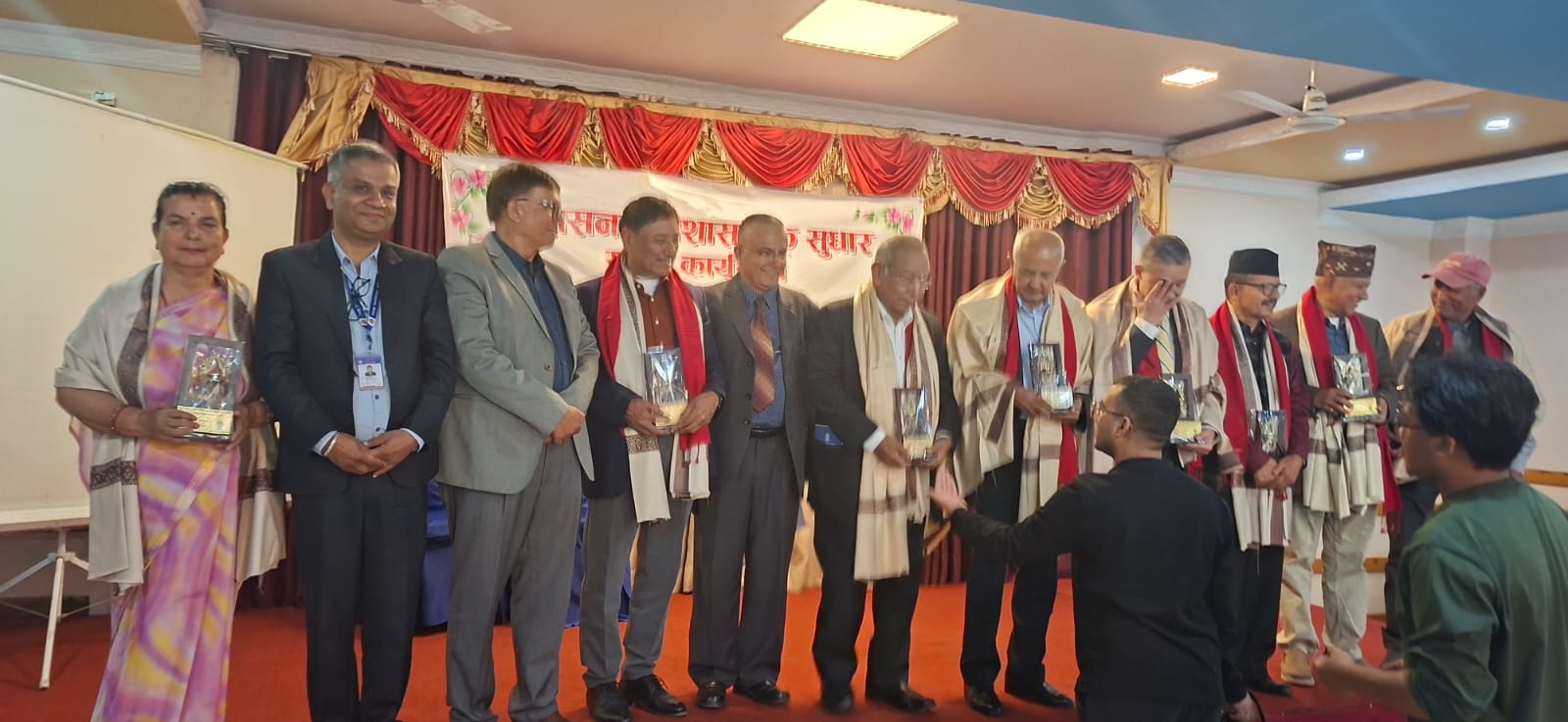
A felicitation ceremony was also organized at the conclusion of the program. On the occasion, former professors of the Public Administration Campus including Prof. Dr. Prachanda Man Pradhan, Dr. Madhunidhi Tiwari, Prof. Dr. Shreekrishna Shrestha, Prof. Dr. Govinda Prasad Dhakal, Prof. Dr. Tek Nath Dhakal, Prof. Ratnaraj Niroula, Prof. Dr. Purushottam Sharma, Prof. Dr. Rajiv Bikram Rana, Prof. Yashoda Kumari Kafle, Prof. Dr. Ganesh Prasad Adhikari, and Prof. Dr. Sabitri Aryal were honored.
Similarly, former Presidents of Nepal Public Administration Association including Prof. Dr. Govinda Prasad Dhakal, Prof. Dr. Tek Nath Dhakal, Mr. Krishna Hari Baskota, Mr. Krishna Gyawali, and Dr. Hiramani Ghimire were also honored.
It is believed that the program will further strengthen discussions and initiatives related to good governance, administrative reform, digital governance, citizen-centered public service delivery, and the transformation of public service systems in Nepal.