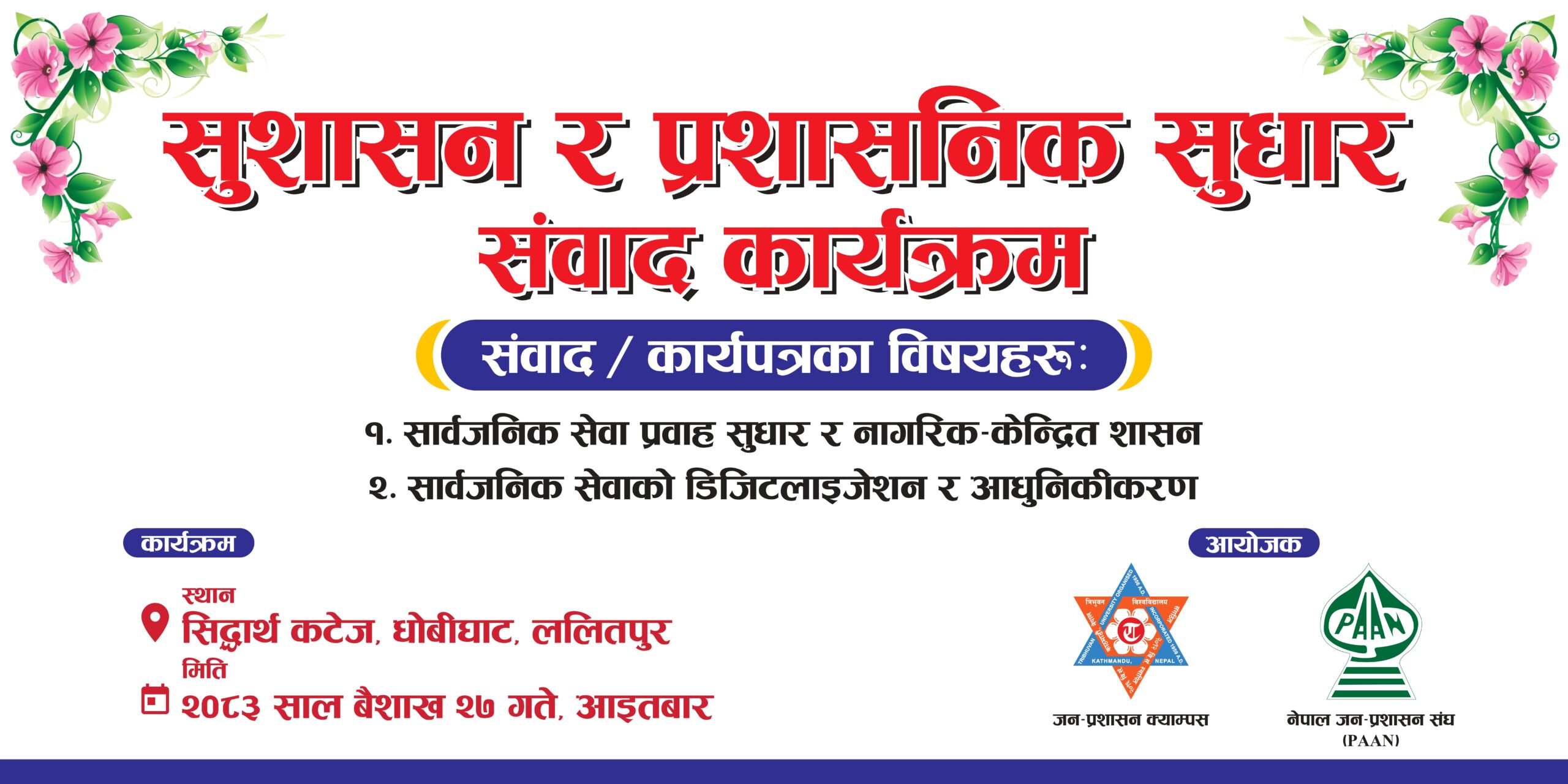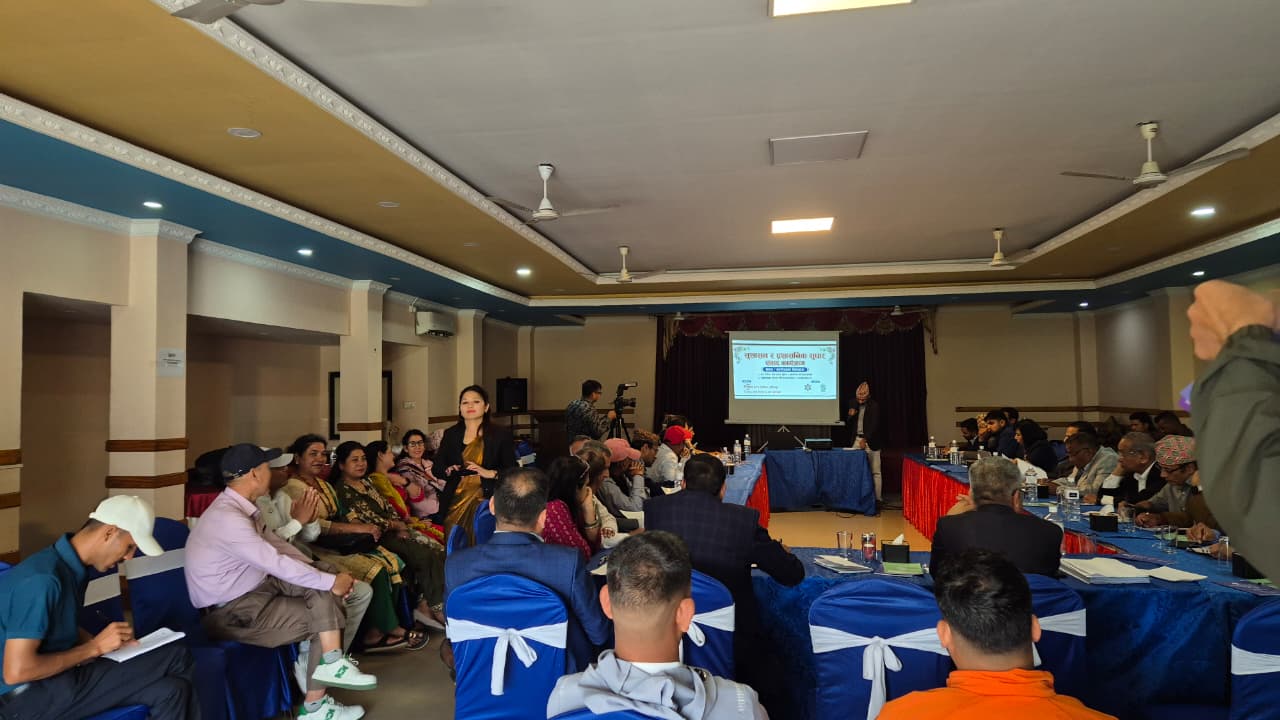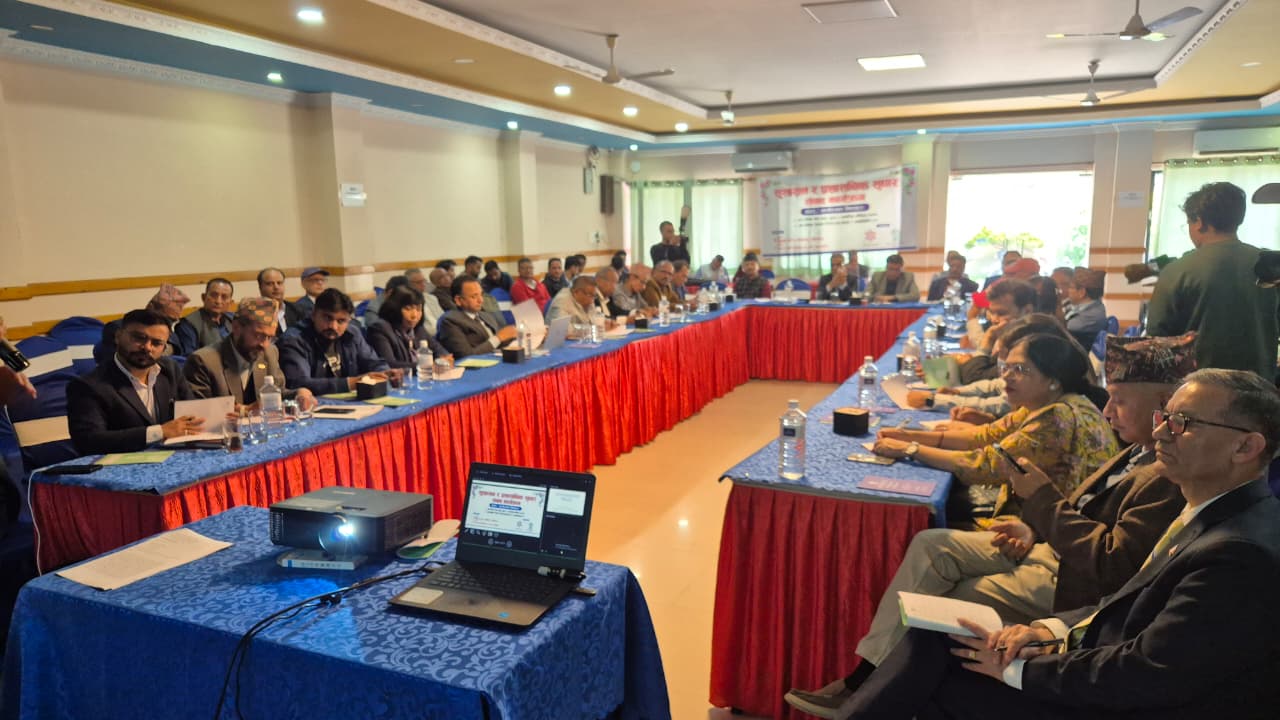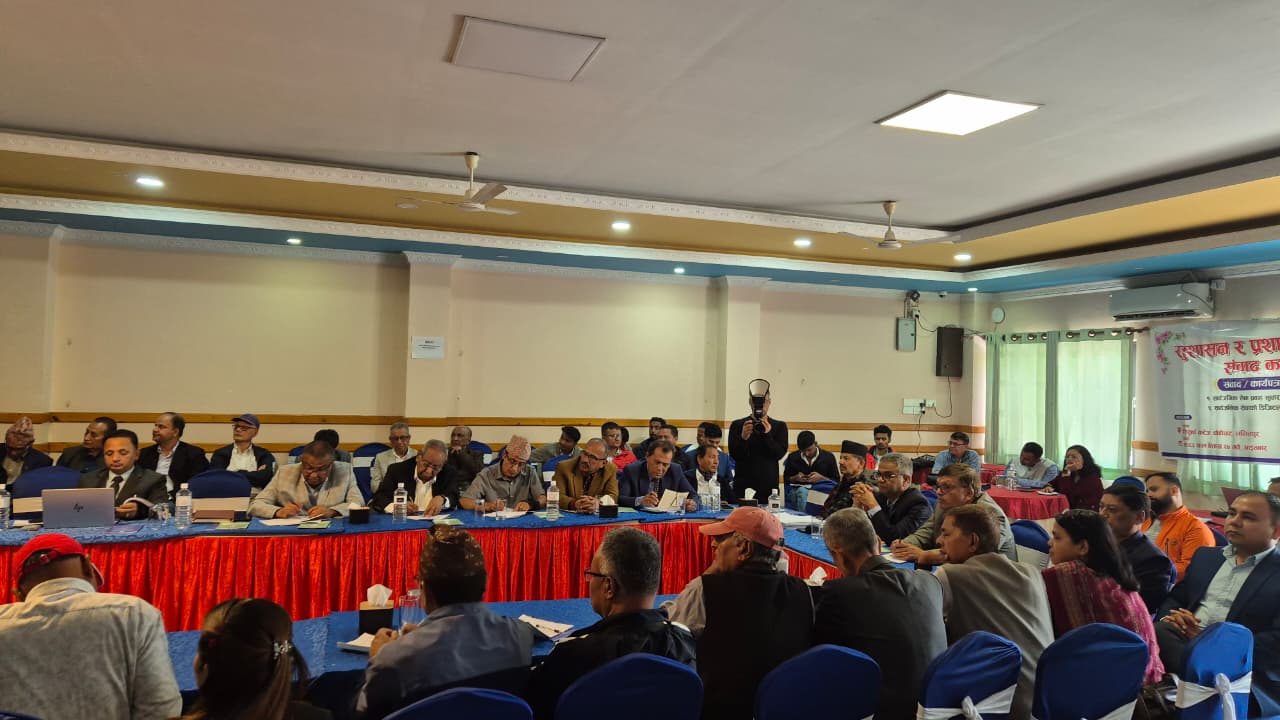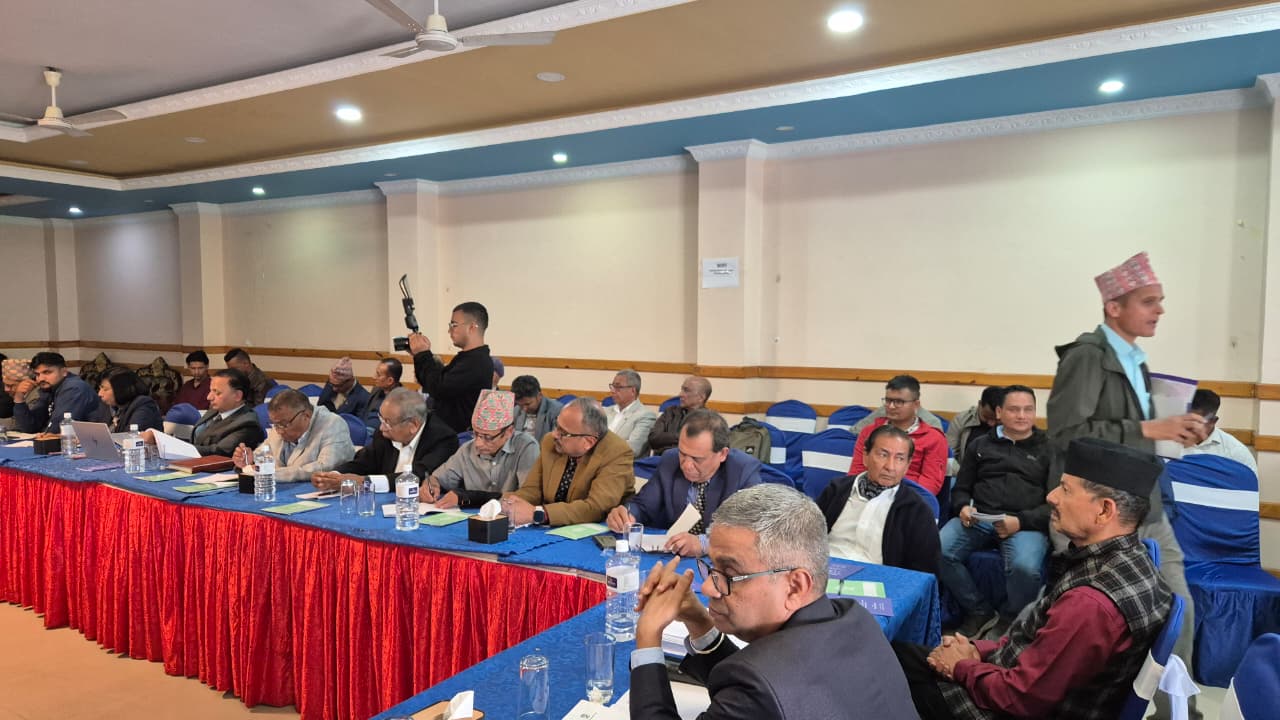
The “Governance and Administrative Reform Dialogue Program” was successfully held on Baisakh 27, 2083(10th May 2026), at Siddhartha Cottage, Lalitpur, jointly organized by the Public Administration Association of Nepal (PAAN) and Public Administration Campus (PAC). The program featured in-depth discussions on public service delivery reform, citizen-centered administration, and the digitization and modernization of public services.
The first session of the program was facilitated by Mr. Subas Sharma, Campus Chief of the Public Administration Campus (PAC). In the first session, former President of the Public Administration Association of Nepal (PAAN), Mr. Krishna Hari Baskota, presented a working paper on “Public Service Delivery Reform and Citizen-Centric Administration.” The presentation, focused on public service delivery reform, good governance, and citizen-friendly administration, presented important suggestions for making service delivery simpler, faster, more transparent, and technology-friendly. In particular, the issue of making transportation services, including license renewal, registration, and related services, more effective through online systems drew special attention. Likewise, citizen accessibility, expansion of digital services, and the construction of accountable administration were among the major highlights of the presentation. Associate Professor Mr. Keshav Pandey of the Public Administration Campus (PAC) and Joint Secretary Mr. Hemraj Aryal expressed their views as commentators on the paper. During the discussion, emphasis was placed on the need for reforms in administrative structures, working procedures, and behavior to make public service delivery more effective, transparent, accountable, and citizen-friendly.
The second session of the program was facilitated by Mr. Madhurman Acharya, President of the Public Administration Association of Nepal (PAAN). In the second session, Mr. Bibhusan Bista presented a working paper on “Digitization and Modernization of Public Services.” During the program, Mr. Bibhusan Bista delivered a highly relevant and thought-provoking presentation on “Digitization and Modernization of Public Services in Nepal.” The presentation provided an in-depth analysis of the current state of public service delivery in Nepal, the expansion of digital systems, structural challenges in service delivery, and ways to move toward real “Governance Transformation” through digitization. In particular, emphasis was placed on the difference between e-Government and Governance Transformation, Business Process Reengineering (BPR), inter-agency coordination, citizen-friendly service systems, data integration, KPI-based evaluation, and the need for procedural reforms alongside technology. Furthermore, the presentation clearly concluded that building an integrated digital governance system among the federal, provincial, and local levels in Nepal has become a major necessity of the present time. The paper also included issues relating to the current state of digital governance in Nepal, integration of service systems, data management, Business Process Reengineering (BPR), and governance transformation. The paper was commented upon by Mr. Subash Khadka, Chief Manager of the Employees Provident Fund, and Professor Dr. Shreekrishna Shrestha.
As a commentator in the program, Mr. Subash Khadka highlighted the need to connect public service delivery reform and digital governance systems with practical implementation, expressing the view that accountability, coordination, and institutional commitment are indispensable alongside technology-friendly administration. He particularly emphasized that with the expansion of digital systems, citizens should directly experience services that are easy, fast, and transparent. Similarly, Professor Dr. Shreekrishna Shrestha pointed out the need to transform administrative reform, good governance, and public service management into institutional culture through practical transformation, rather than limiting them only to the policy level. He emphasized that along with digitization, procedural reform, human resource development, responsible leadership, and the development of citizen-centric administrative thinking are essential, expressing confidence that such interactive and intellectual programs would help build a foundation for positive debate and reform in the field of public administration.
During the closing session of the program, Mr. Madhurman Acharya, President of the Public Administration Association of Nepal (PAAN), expressed the view that public service reform and digital governance systems should not be limited merely to the use of technology, but should move forward by connecting them with citizen convenience, public trust, transparency, accountability, and result-oriented administration. He stated that without policy clarity, institutional commitment, enhancement of human resource capacity, and practical improvement in service delivery, digital transformation cannot achieve the expected results. He further expressed confidence that such intellectual and professional discussions would further strengthen policy-making and administrative reform efforts.
The program witnessed active participation from various scholars, professors, and experienced personalities from the administrative sector. Professor Dr. Prachandaman Pradhan emphasized the need for coordination between theoretical and practical aspects and stressed practical training and capacity enhancement for administrative reform. Professor Dr. Teknath Dhakal pointed out that arrangements such as citizen charters have not been effectively implemented in practice and expressed the view that they should not be limited to mere formality but should instead be made service-recipient friendly. Likewise, Mr. Lakhan Lal Sah highlighted the need to provide training and capacity development opportunities even to non-officer frontline employees involved in service delivery. Dr. Rohit Shrestha expressed the view that administration should be made more “action-oriented” and that changes in service delivery should be brought through practical reforms.
At the beginning of the program, General Secretary of the Public Administration Association of Nepal, Dr. Dilip Raj Paudel, expressed the view that in the context of digital transformation, it should be clear whether Nepal seeks only incremental improvement or a paradigm shift in the governance system itself. He mentioned that while the operational speed of the government is moving ahead in a “commando style,” the administrative structure is still moving at a tortoise pace, making structural and behavioral reforms indispensable for change. He also pointed out that differences in names across citizenship certificates, national identity cards, PAN numbers, passports, bank accounts, and mobile numbers are creating challenges in data integration and automation within the digital service system. Furthermore, he emphasized the need to pay special attention to data accuracy, data security, and digital literacy in order to make the service system fully digital. Raising issues such as the need to establish “help desks” in every office to facilitate citizens in using online systems, he welcomed and expressed gratitude to all participants present at the program.
The first session of the program was facilitated by Mr. Subas Sharma, Campus Chief of the Public Administration Campus (PAC), while the second session was facilitated by Mr. Madhurman Acharya, President of the Public Administration Association of Nepal (PAAN).
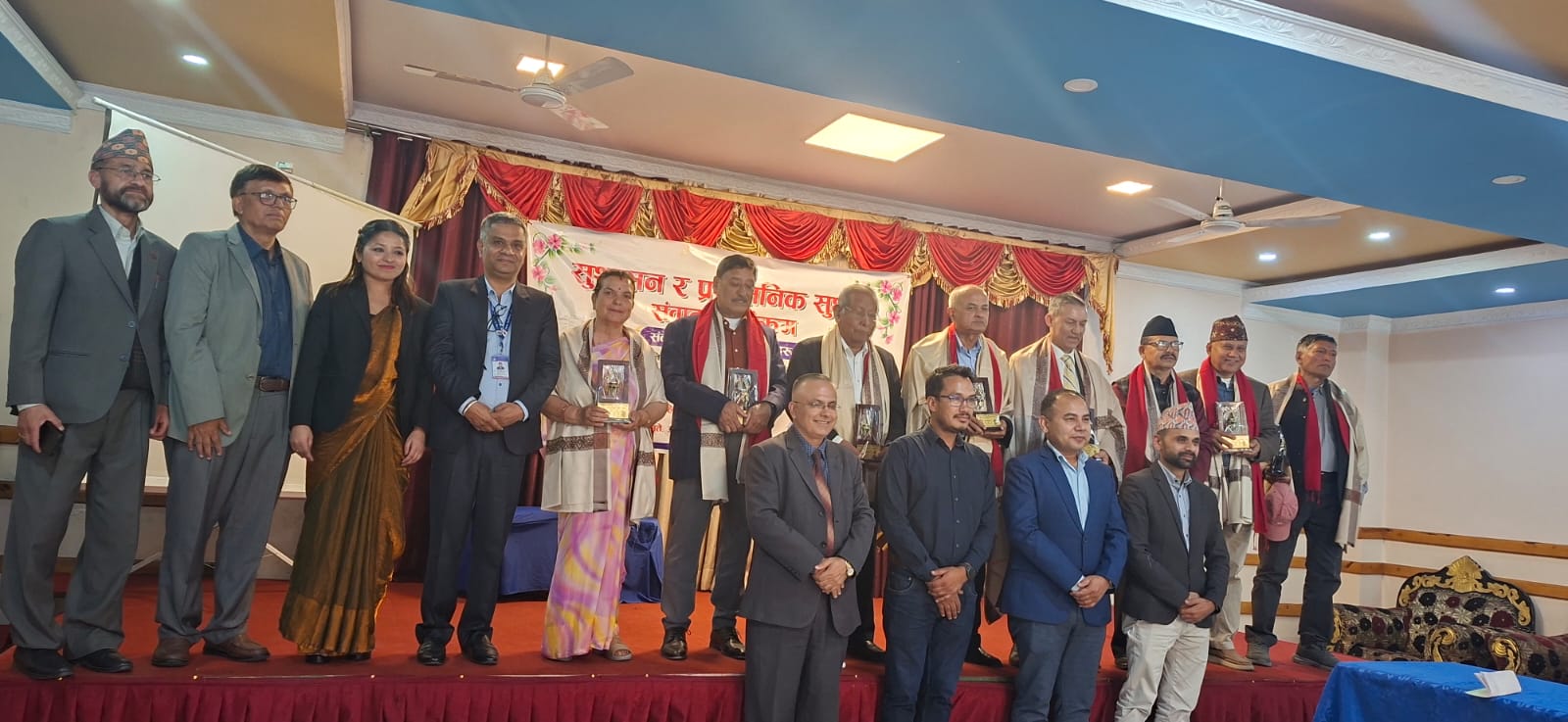
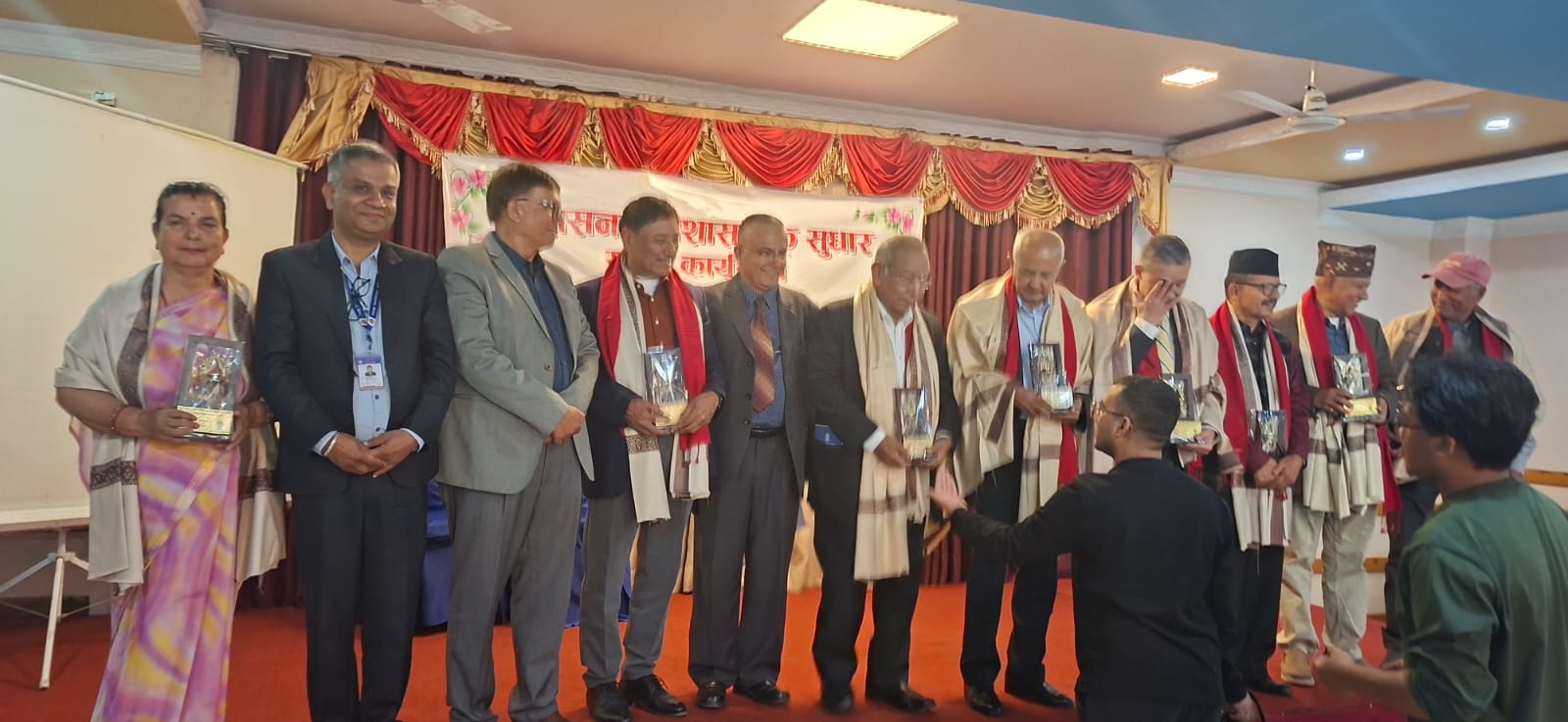
At the end of the jointly organized program coordinated between the Public Administration Association of Nepal (PAAN) and the Public Administration Campus (PAC), Ms. Jamuna Dangal, Secretariat Chief and Chief Executive Officer of PAAN, informed that a special ceremony was also organized to honor former professors of the Public Administration Campus and former Presidents of the Public Administration Association of Nepal (PAAN). On the occasion, former professors of the Public Administration Campus, including Professor Dr. Prachandaman Pradhan, Dr. Madhunidhi Tiwari, Professor Dr. Shreekrishna Shrestha, Professor Dr. Govinda Prasad Dhakal, Professor Dr. Teknath Dhakal, Professor Ratna Raj Niraula, Professor Dr. Purushottam Sharma, Professor Dr. Rajiv Bikram Rana, Professor Yashoda Kumari Kafle, Professor Dr. Ganesh Prasad Adhikari, and Professor Dr. Savitri Aryal, among others, were honored during the program.
Likewise, former Presidents of the Public Administration Association of Nepal (PAAN), including Professor Dr. Govinda Prasad Dhakal, Professor Dr. Teknath Dhakal, Mr. Krishna Hari Baskota, Mr. Krishna Gyawali, and Dr. Hiramani Ghimire, were also honored.
It is believed that the program will contribute to further strengthening discussions related to good governance, administrative reform, digital governance, citizen-centric service delivery, and transformation of the public service system.