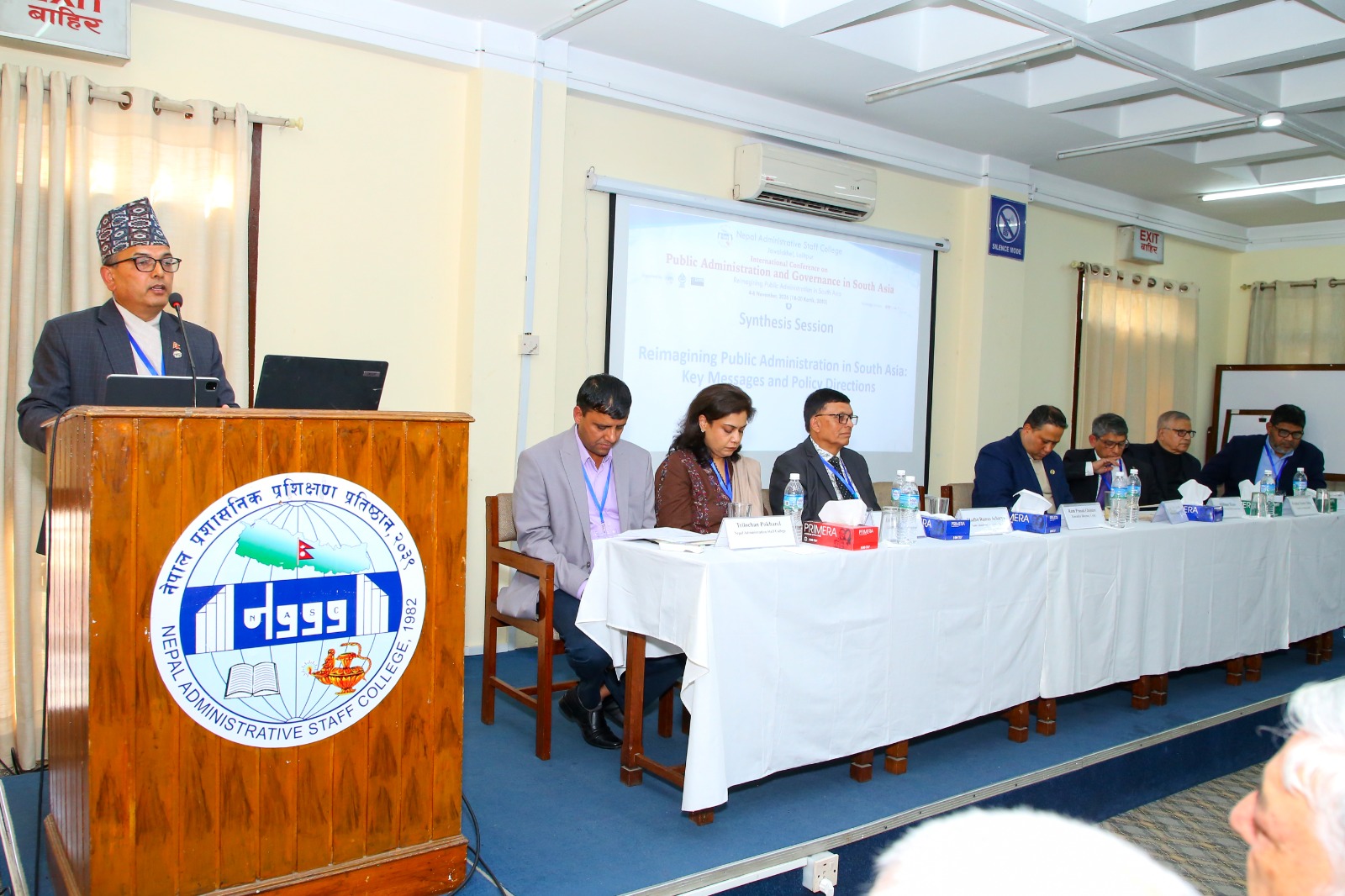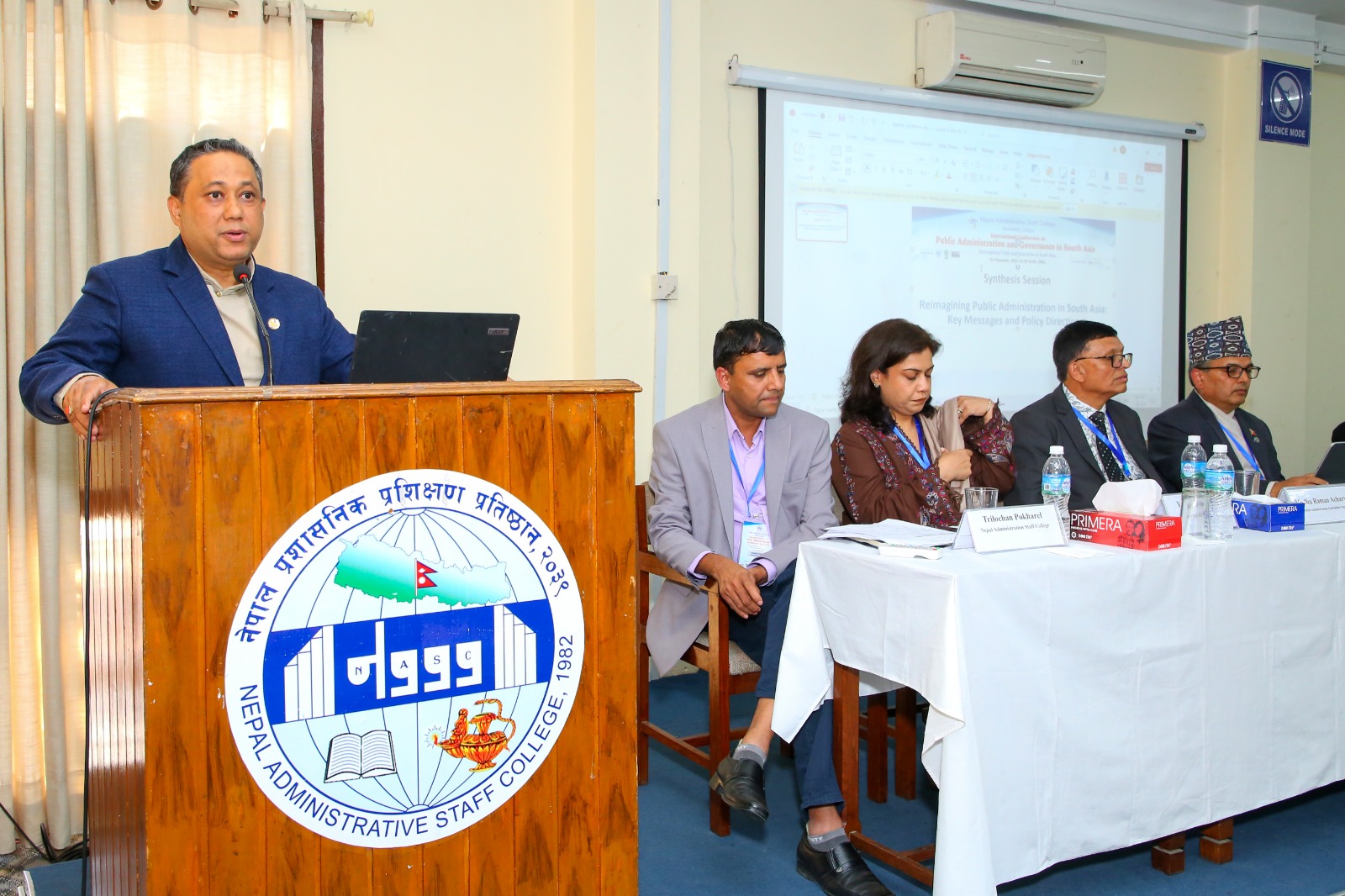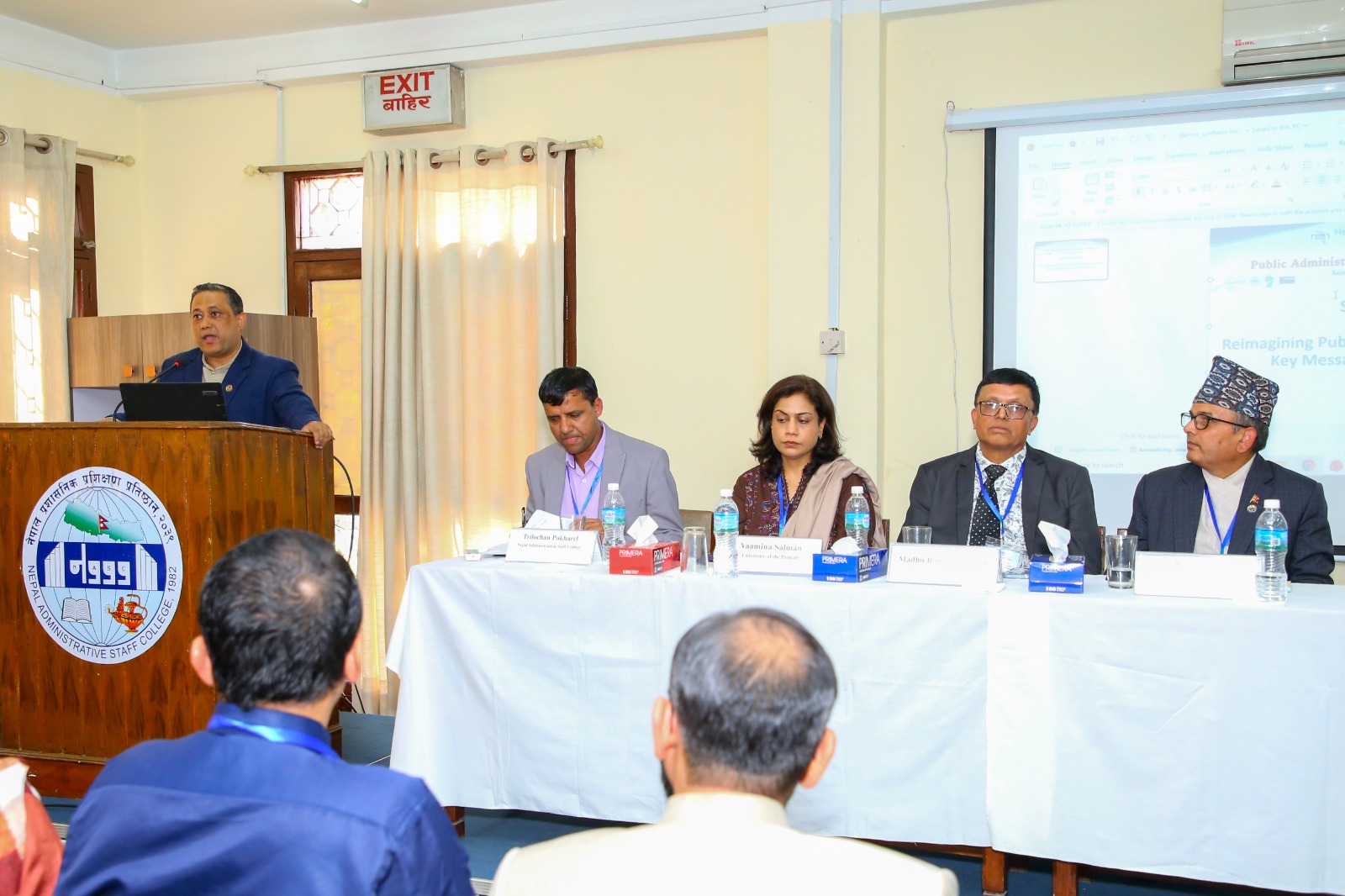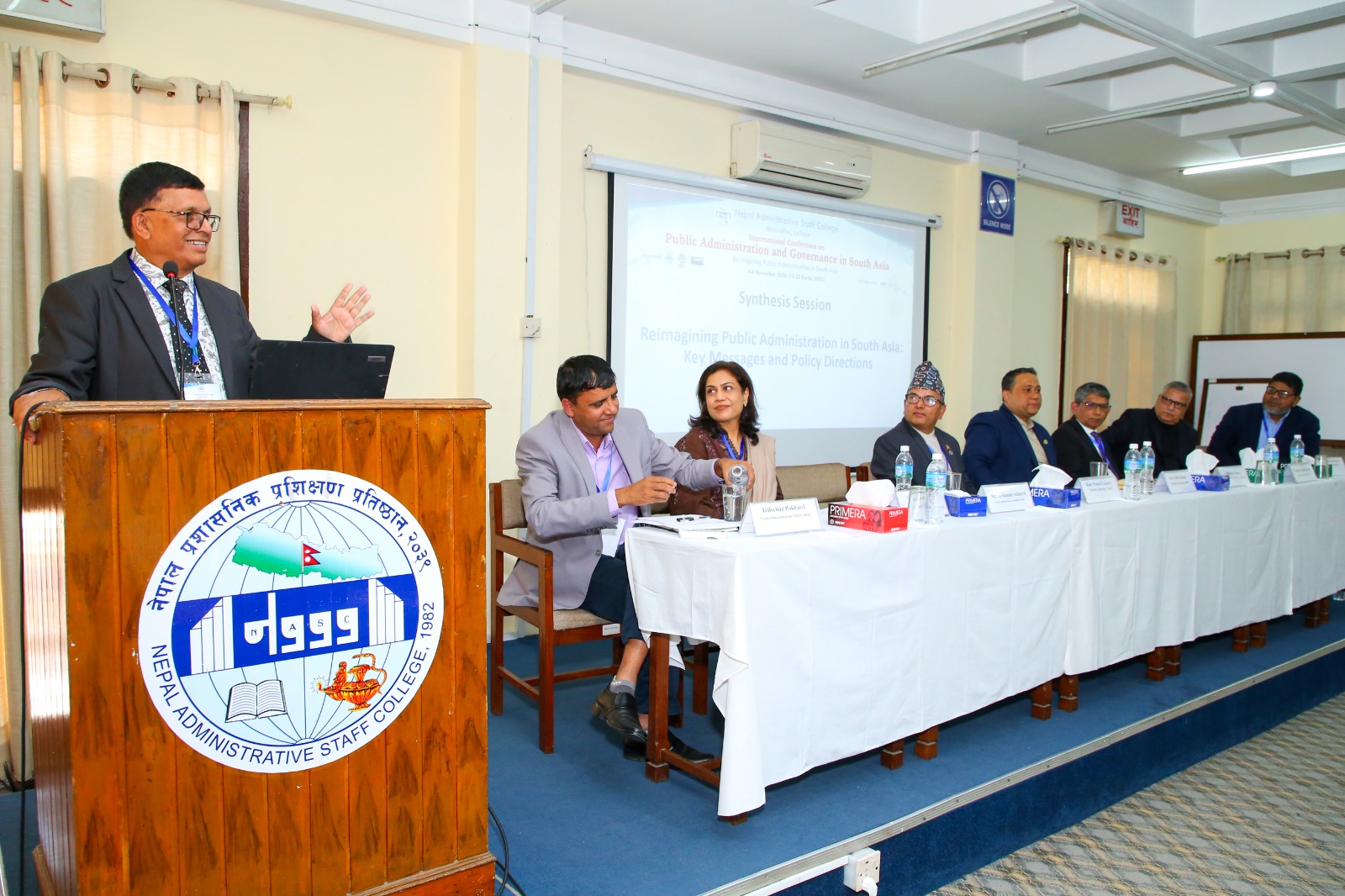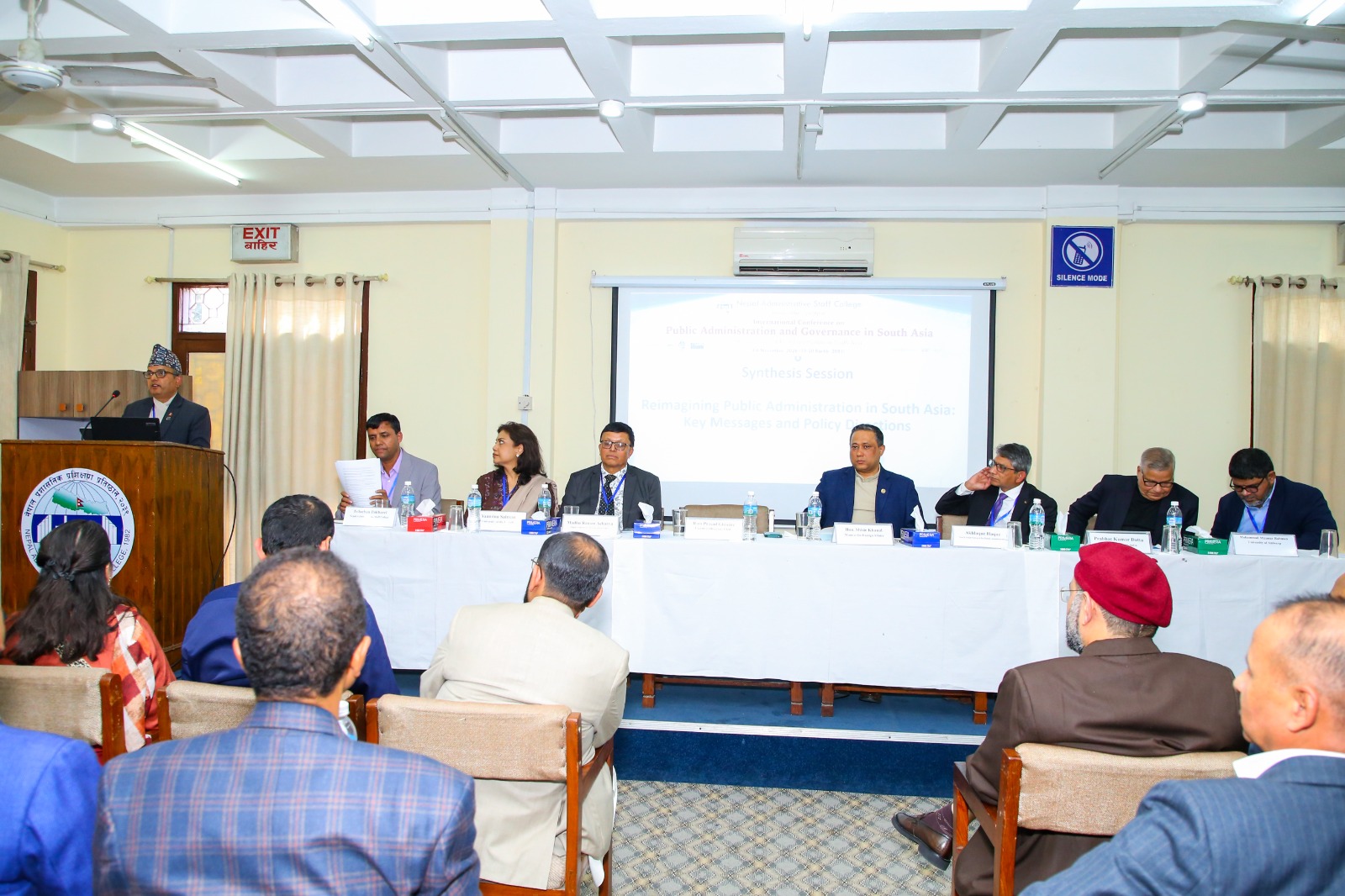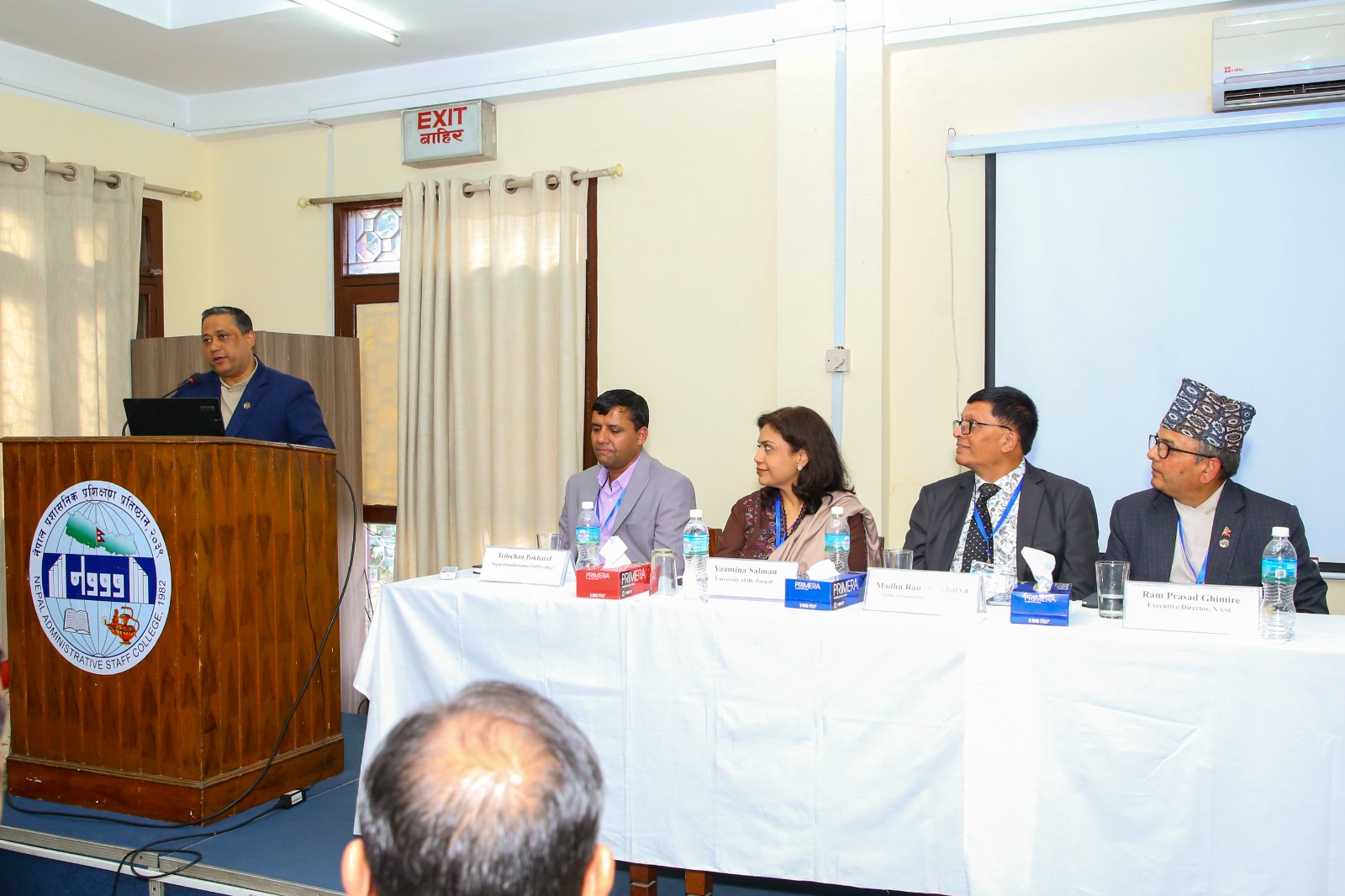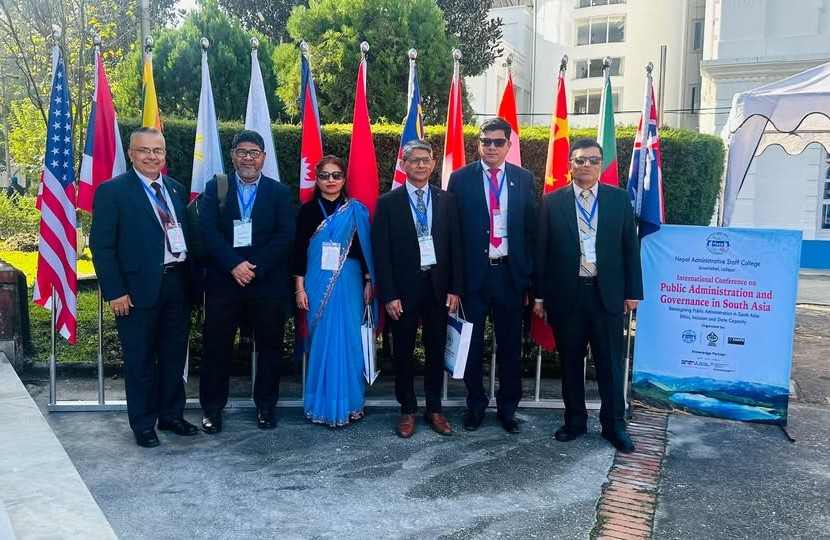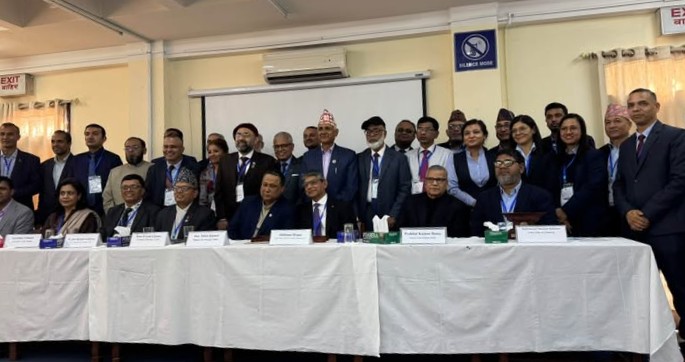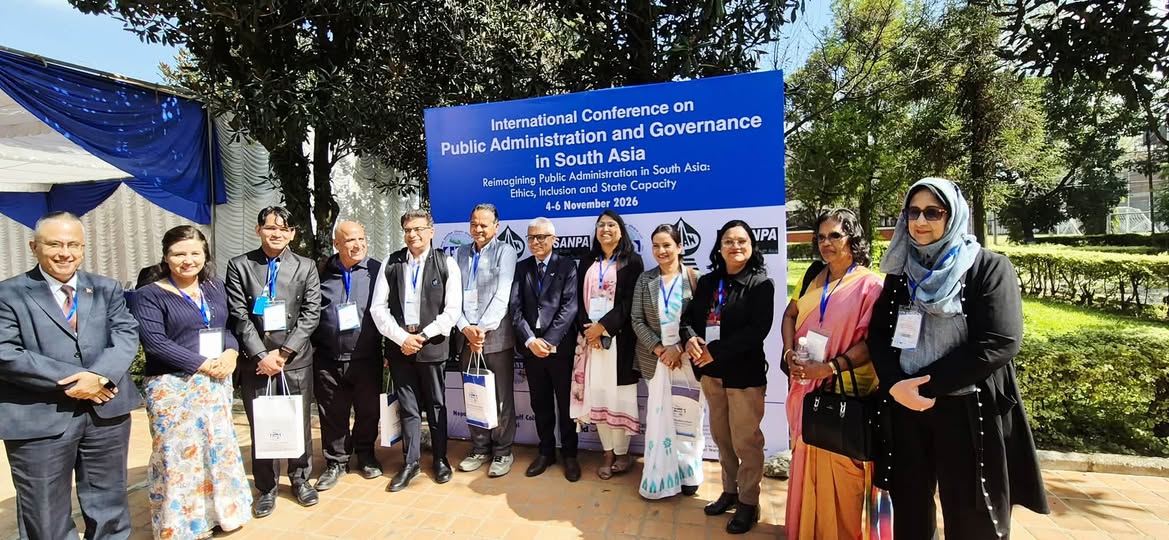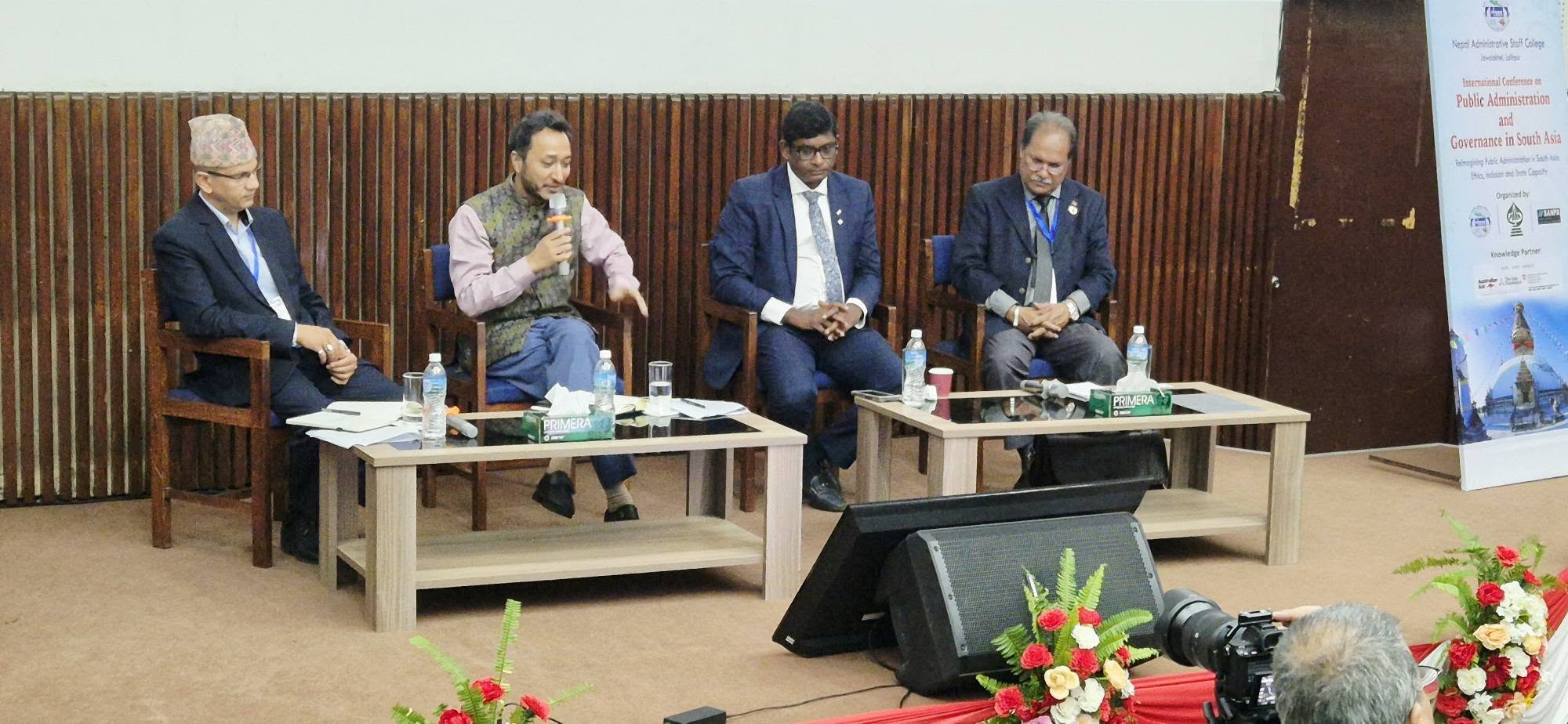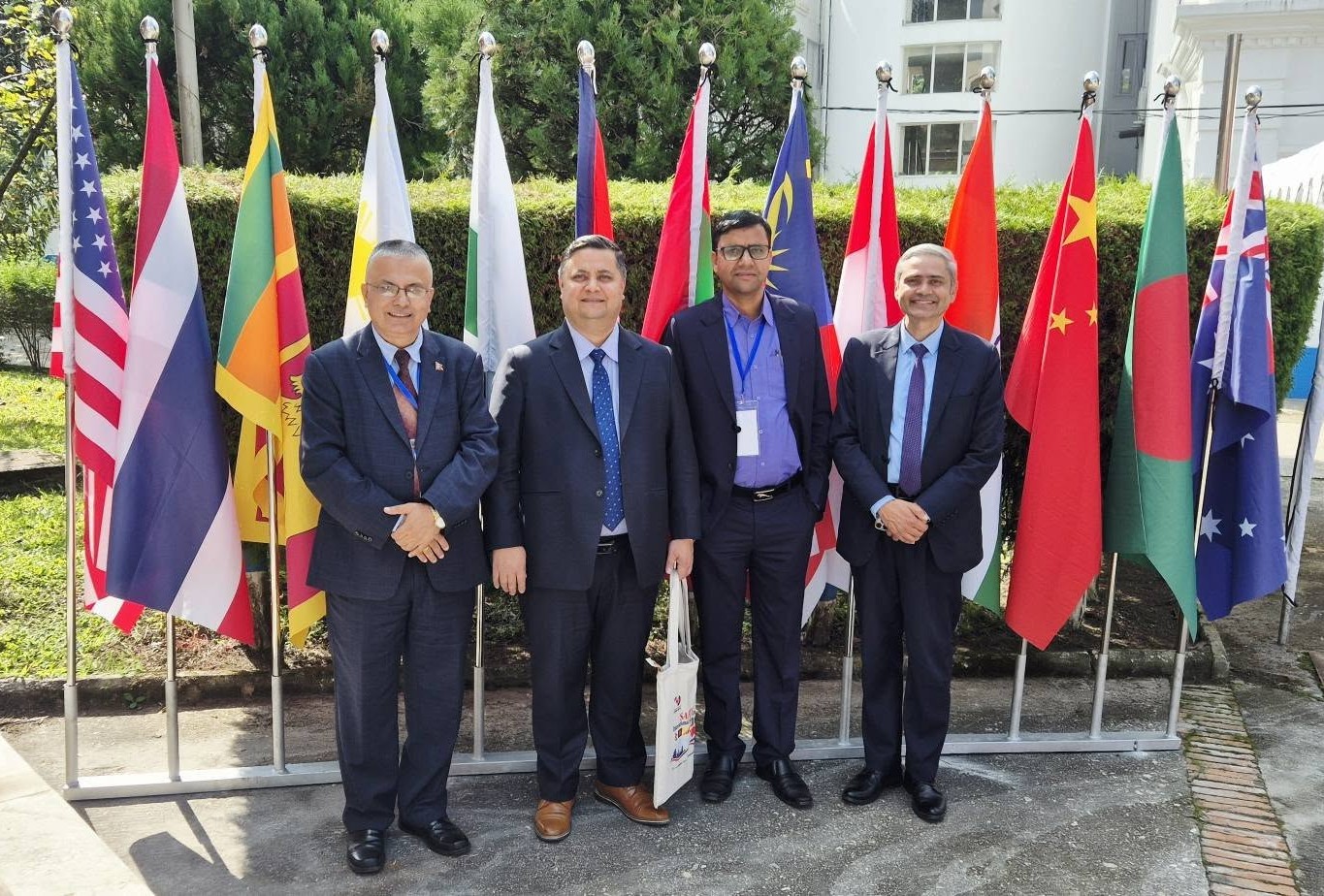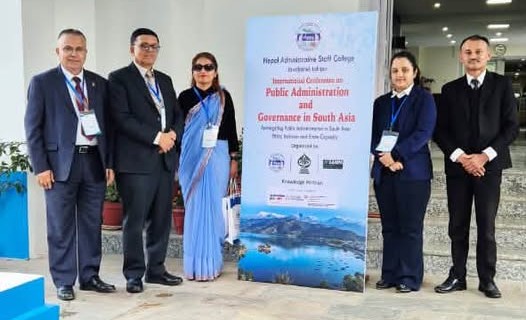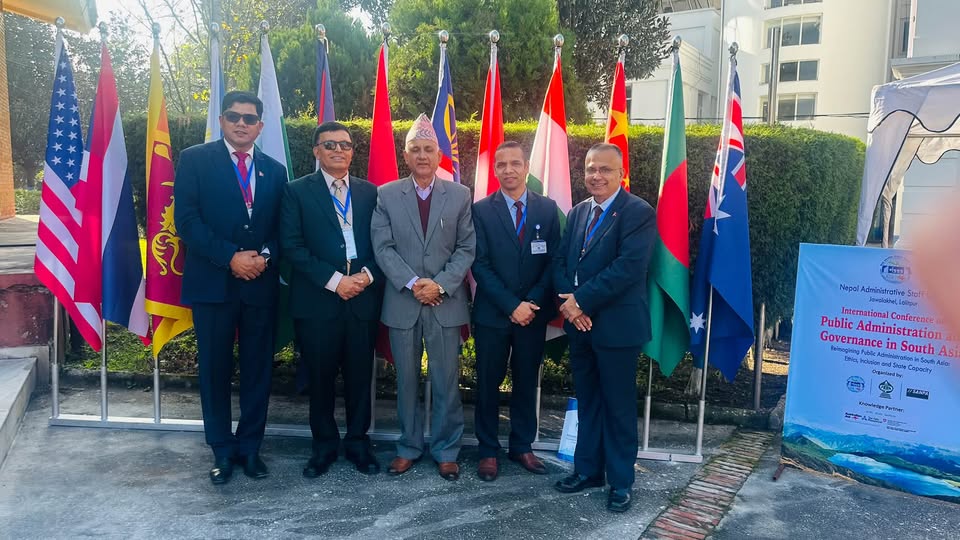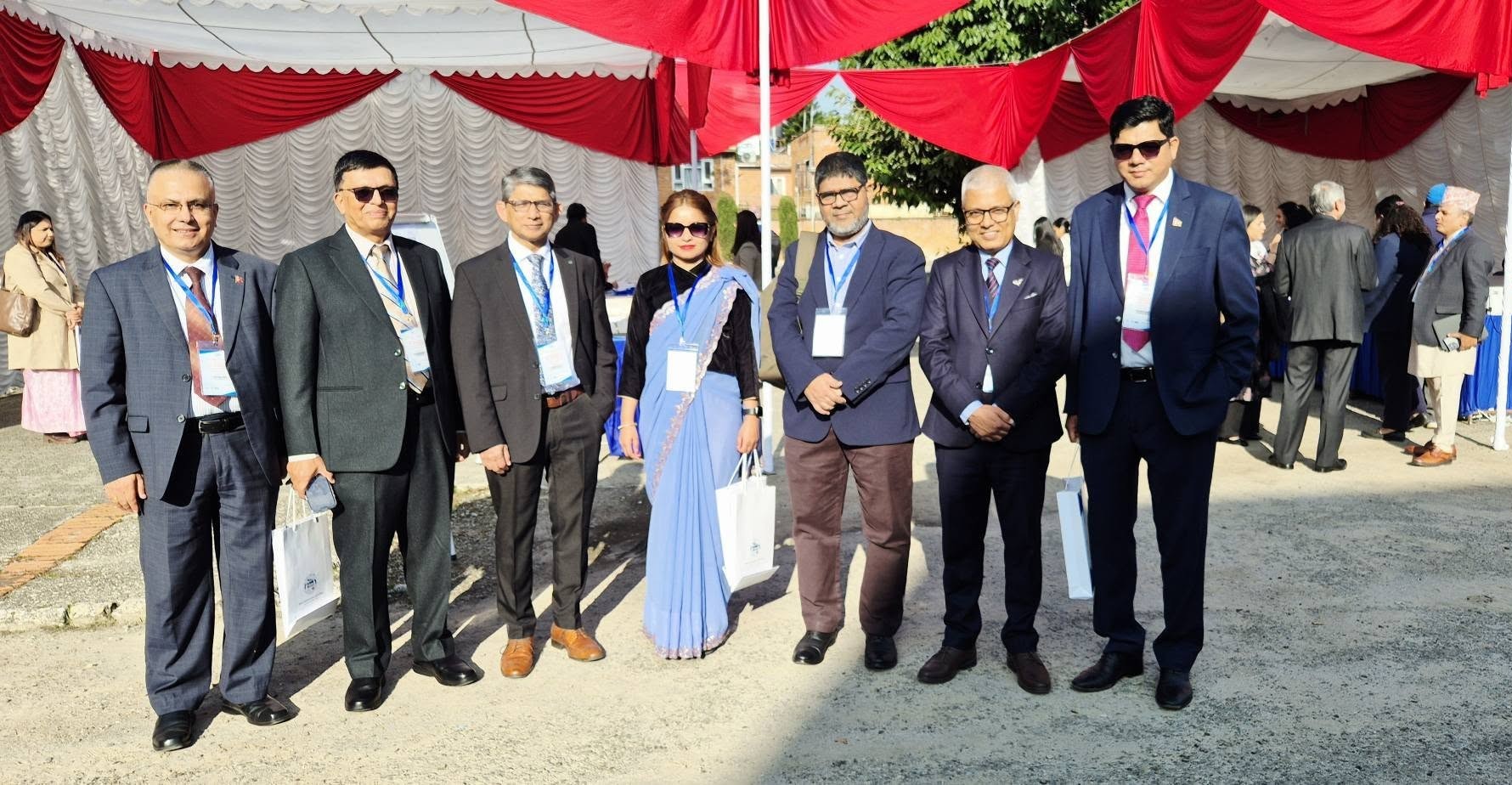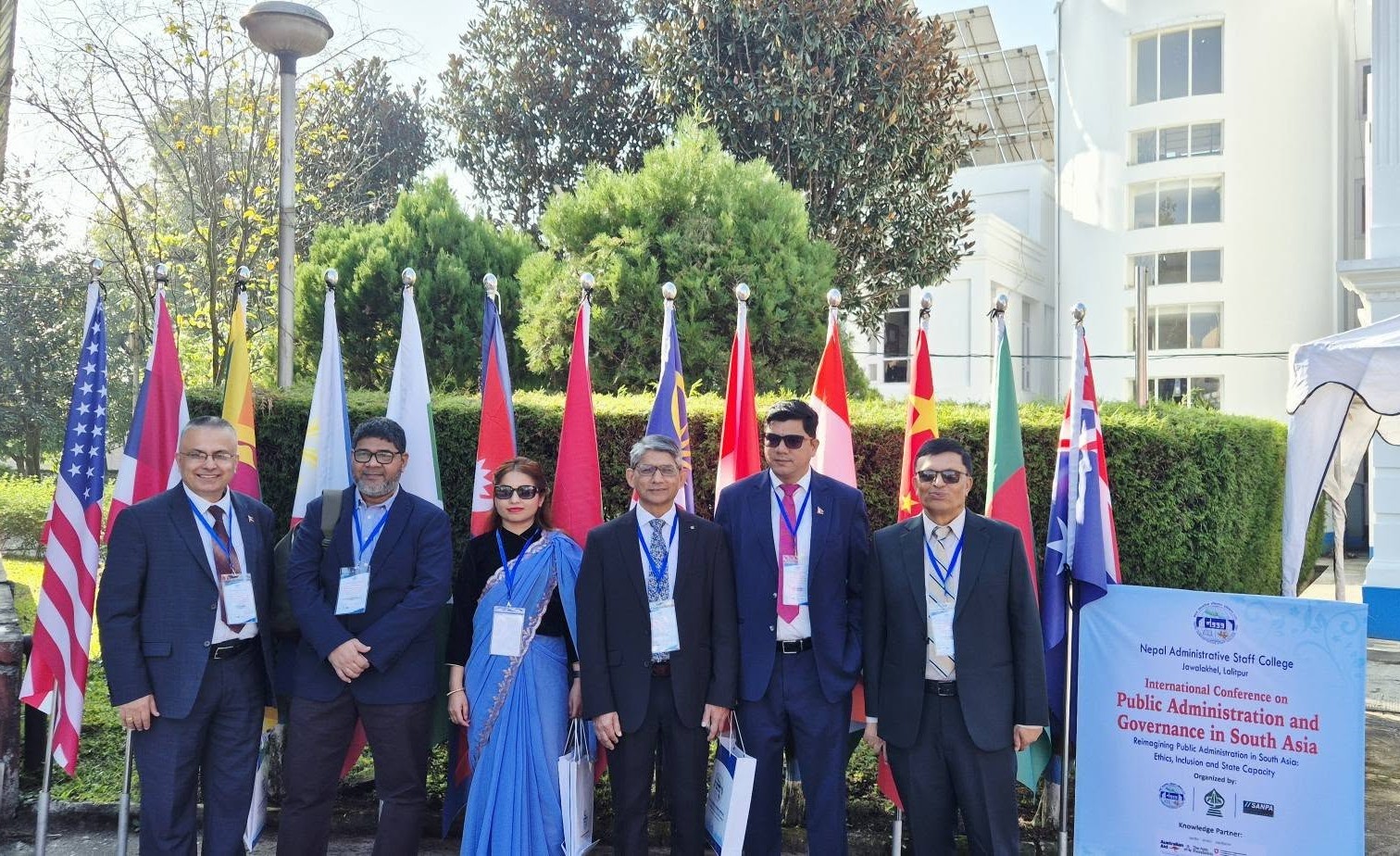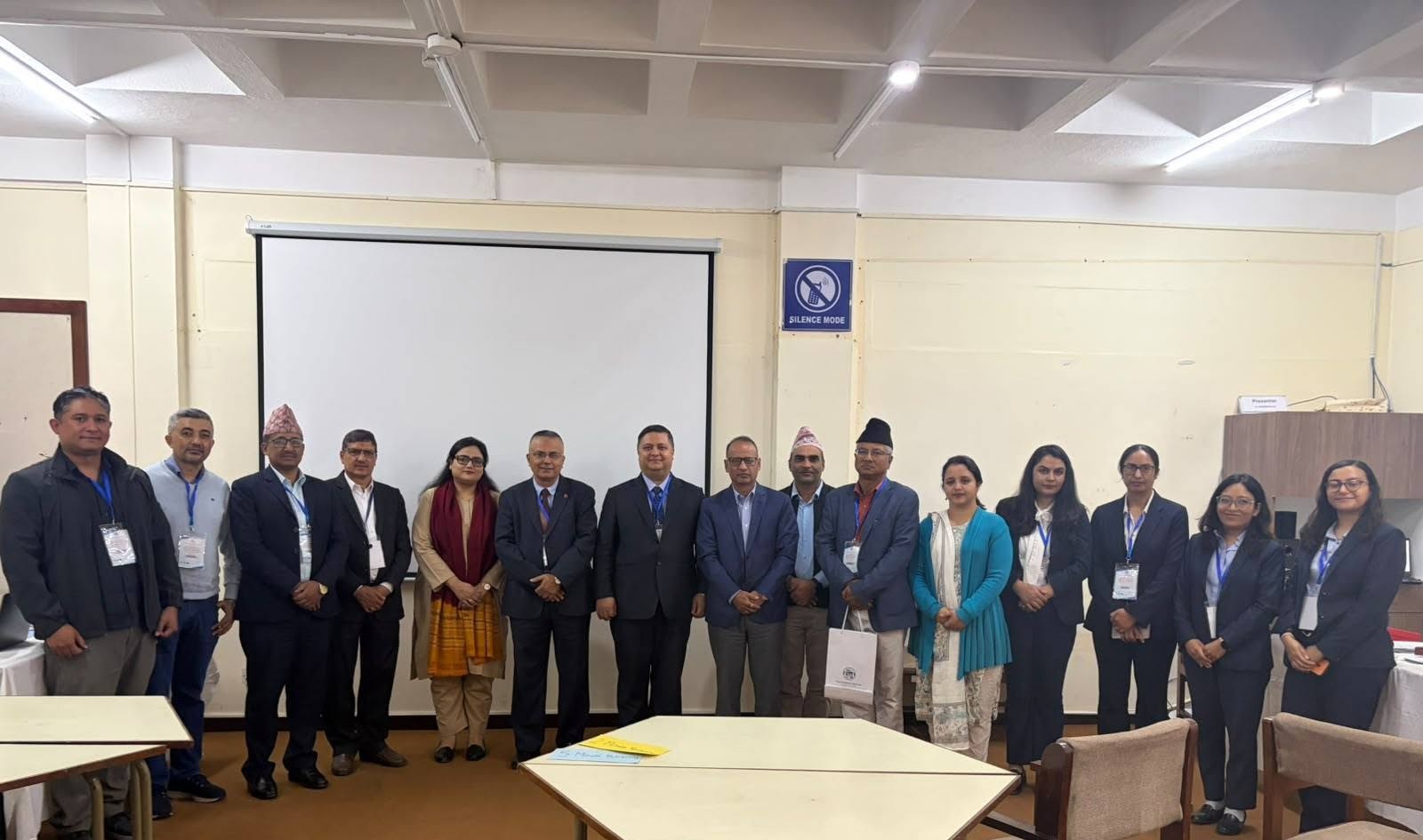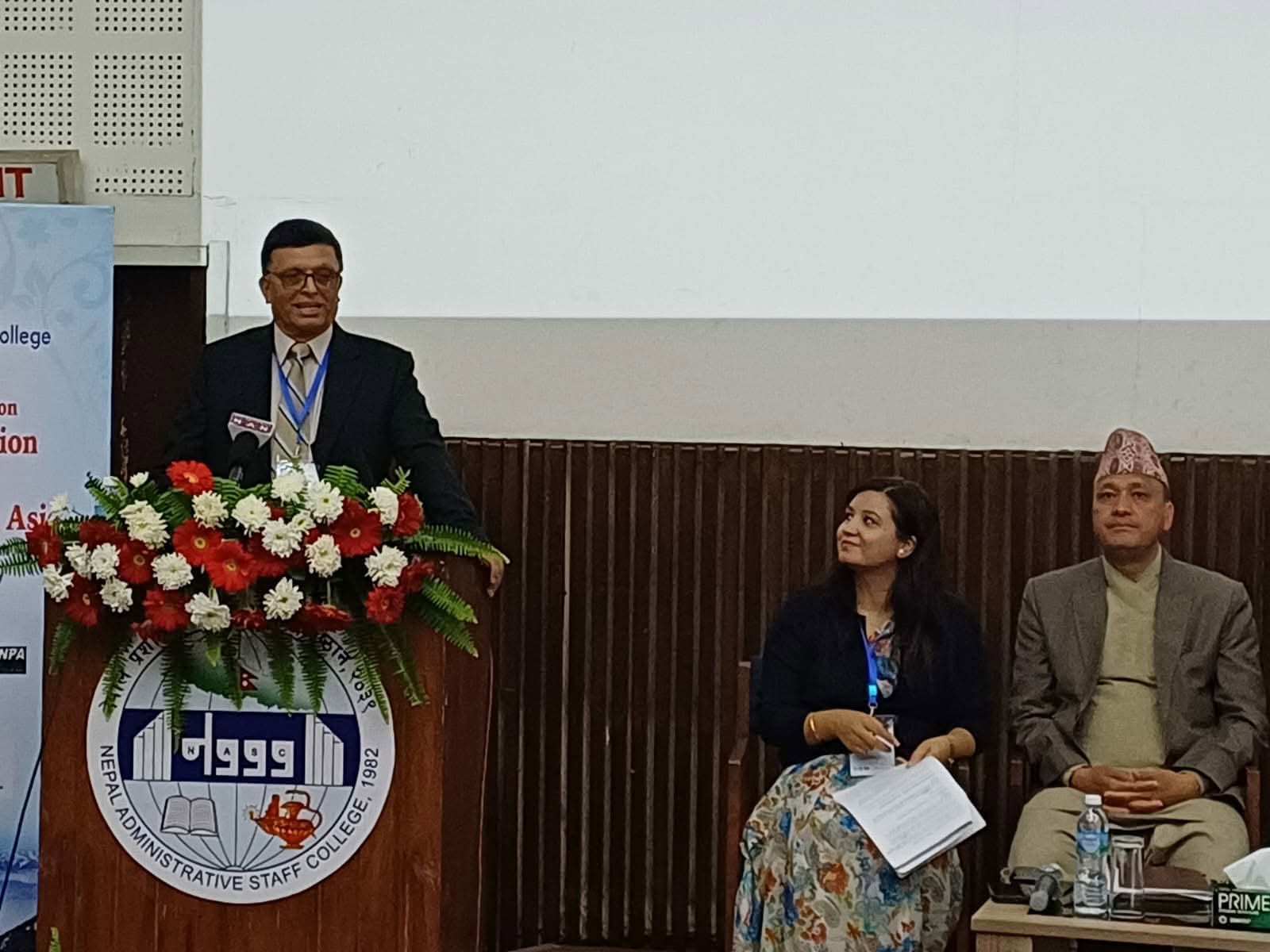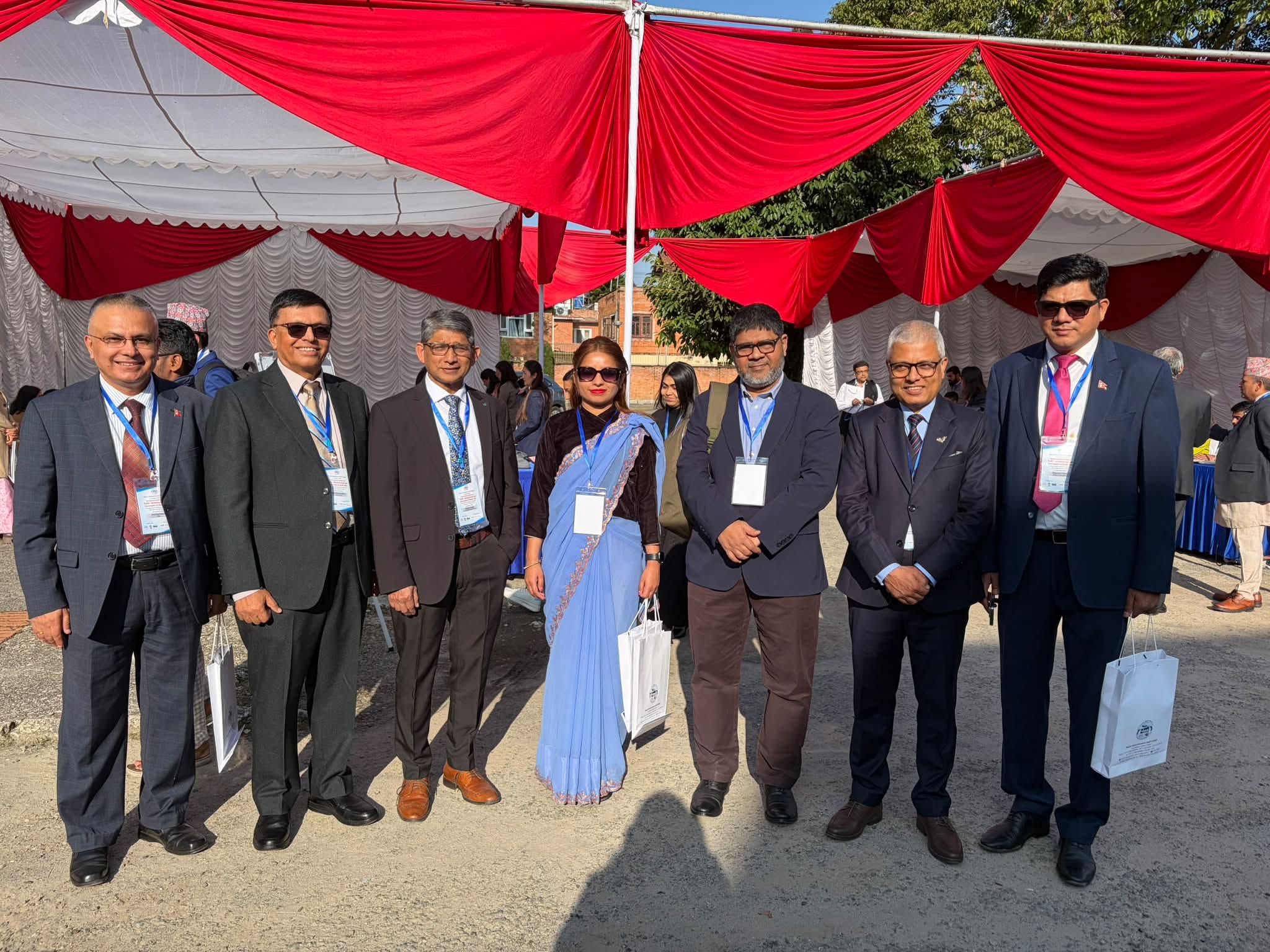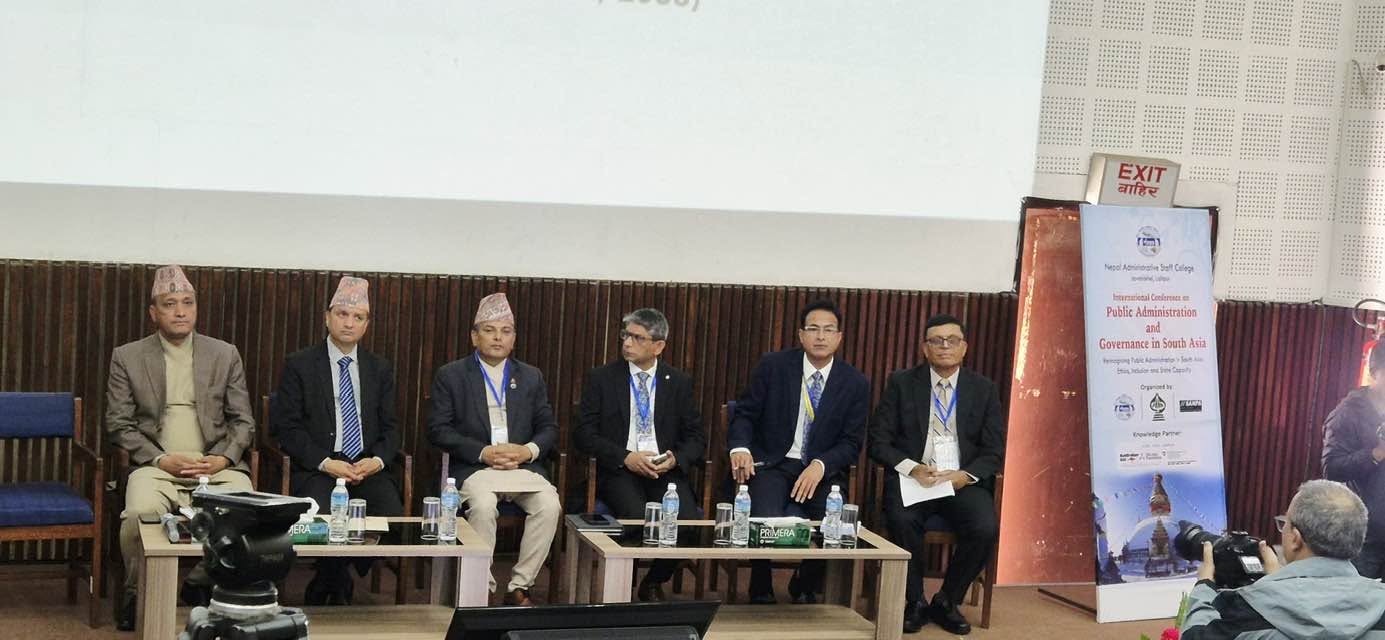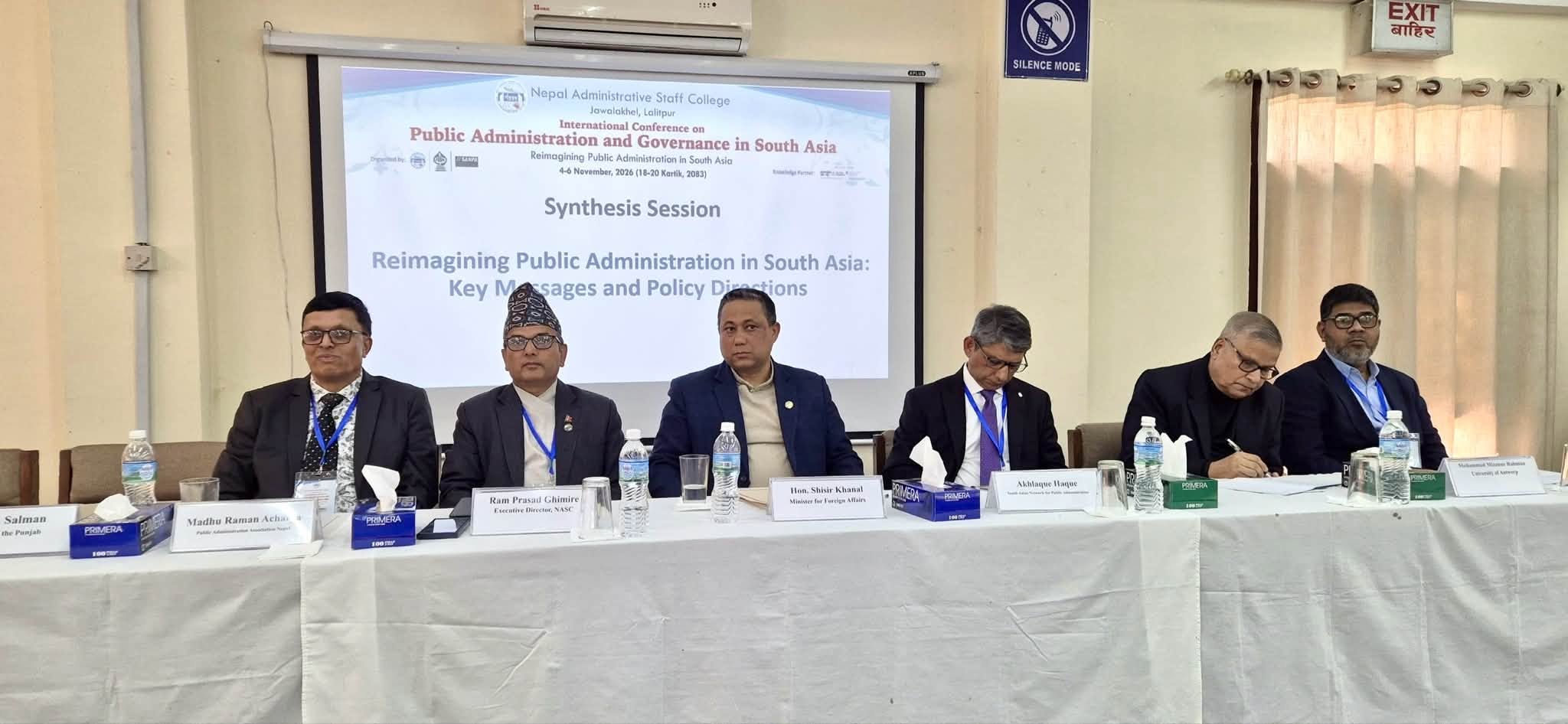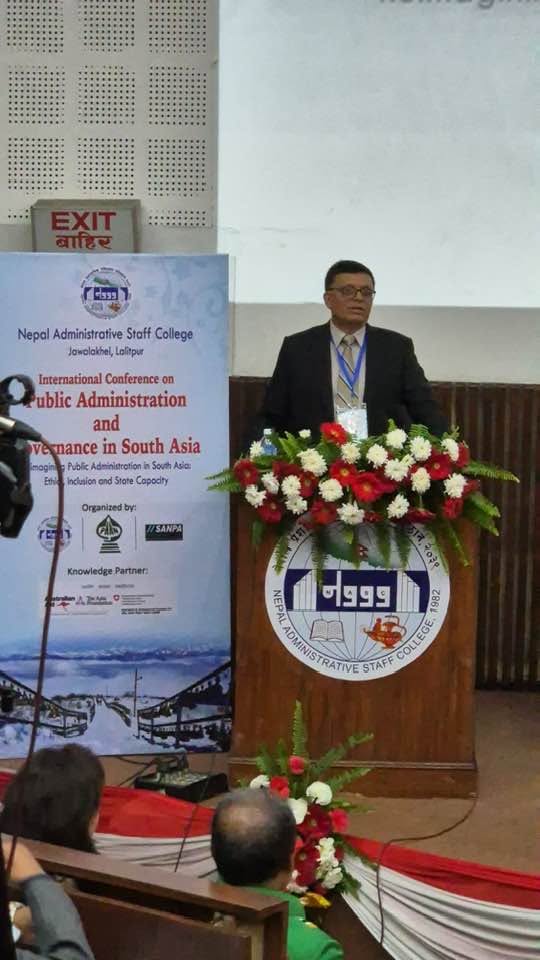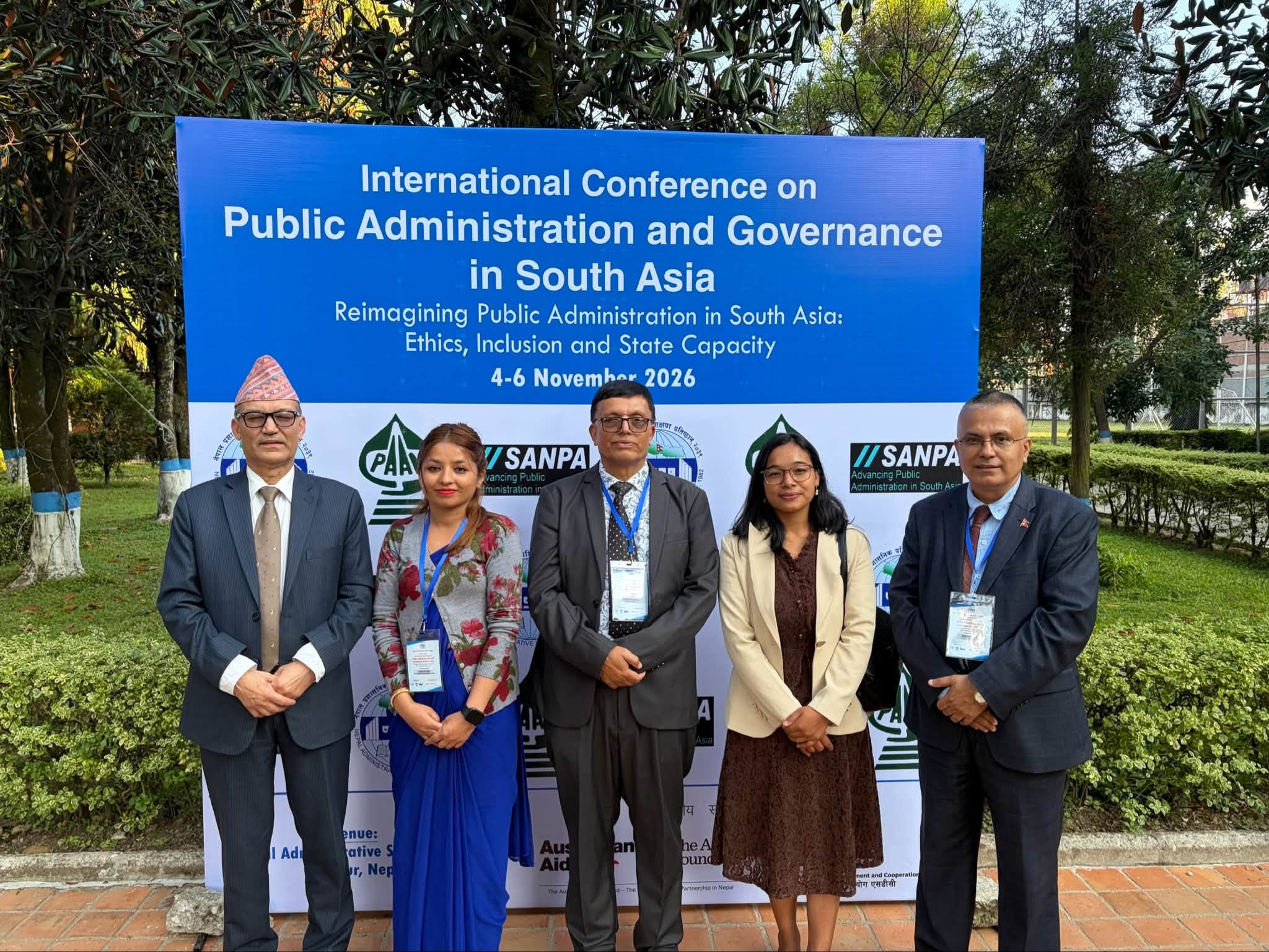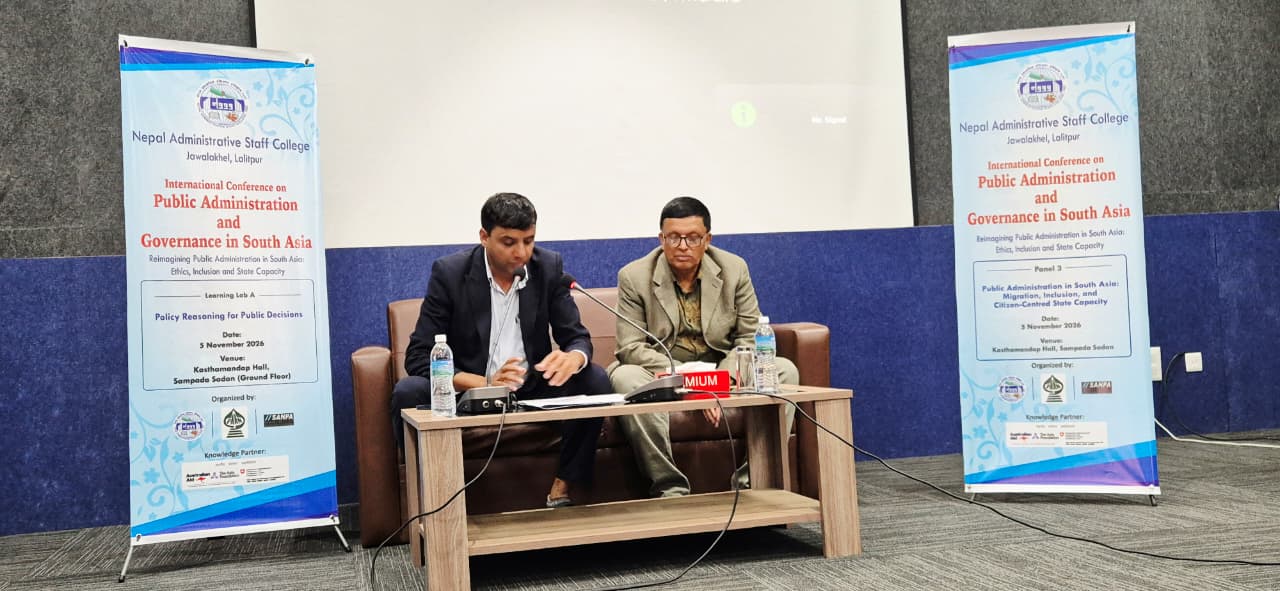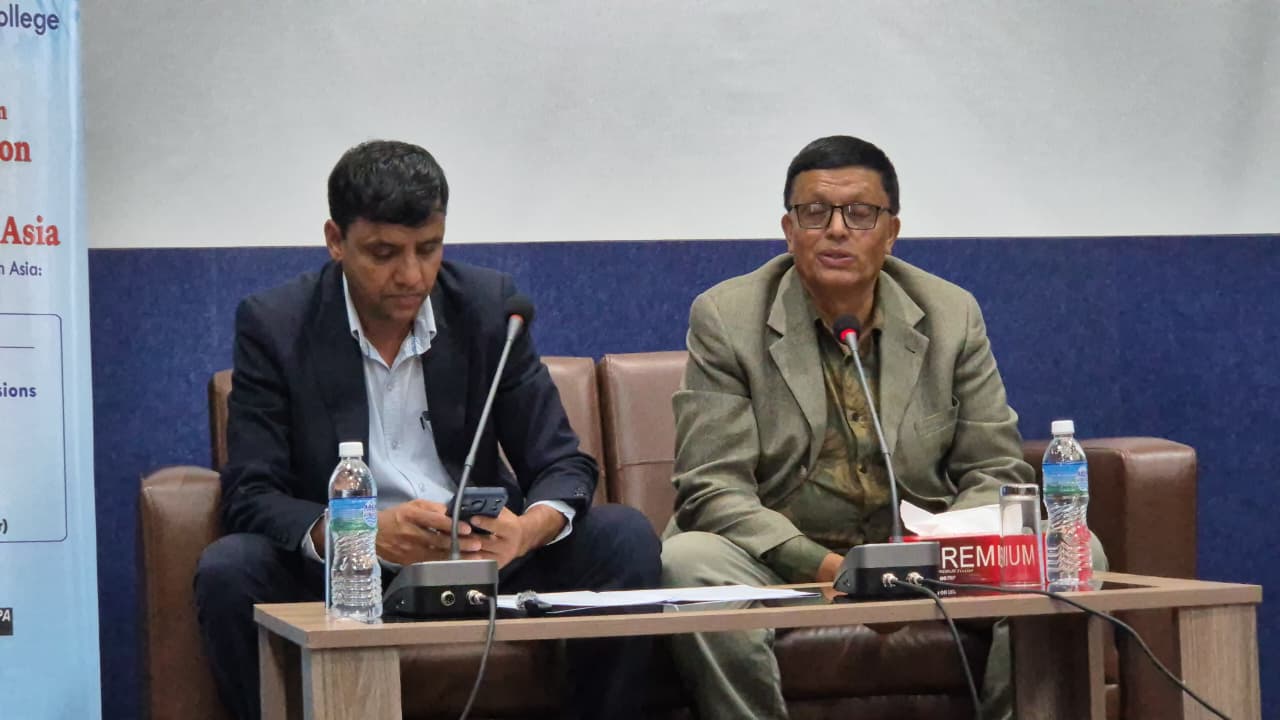
The International Conference on Public Administration and Governance in South Asia 2026, jointly organized by the Nepal Administrative Staff College (NASC), the Public Administration Association of Nepal (PAAN), and the South Asian Network for Public Administration (SANPA), with The Asia Foundation as the Knowledge Partner, successfully concluded today in Lalitpur, Nepal.
The three-day conference, held from 4 to 6 November 2026 (18–20 Kartik 2083 B.S.) at the Nepal Administrative Staff College, Jawalakhel, Lalitpur, focused on the overarching theme “Reimagining Public Administration in South Asia: Ethics, Inclusion and State Capacity.”
The conference brought together distinguished academics, policymakers, political representatives, senior government officials from Nepal, researchers, and public administration practitioners from South Asia and other parts of the world. More than 300 delegates and researchers from approximately 15 countries participated in and contributed academically to the conference.
Major Conference Activities
Over the three days, the conference featured approximately 145 research contributions, 33 parallel technical sessions, and four thematic panels, facilitating extensive discussions on contemporary issues in public administration, public policy, and governance.
The major thematic areas included public administration and the Sustainable Development Goals (SDGs); public administration in the context of graduation from Least Developed Country (LDC) status and transitional economies; ethical governance and public trust; citizen-centred governance and public service delivery; modernization of public administration and state capacity; and climate change, sustainability, and inclusive governance.
The keynote address on “Reimagining Public Administration in South Asia” was delivered by Dr. Mallika Shakya, Professor at South Asian University.
Two major plenary sessions facilitated in-depth discussions on “Modernizing the State for Citizens, Not Just Efficiency” and “Climate Justice and Public Policy in South Asia: Governance for Inclusion and Resilience.”
In addition to conventional research paper presentations and academic discussions, the conference featured three Deliberative Studios, four Learning Labs, one Policy Lab, a Nepal Dialogue, and a Regional Reflection session.
These activities provided opportunities for critical reflection on contemporary governance challenges, participatory learning, collective policy analysis, and strengthening the relationship between academic research and public policy practice.
A special Nepal Dialogue session focused on Nepal’s experiences with democratic transformation, federal governance, institutional reform, and public service delivery. The discussion highlighted valuable lessons that South Asian countries and the wider international academic community could draw from Nepal’s governance experiences.
Key Messages and Lessons from the Conference
The research presentations, thematic discussions, and dialogues consistently emphasized the need to make public institutions more ethical, inclusive, accountable, capable, and responsive to citizens.
A central message emerging from the conference was that the success of public administration reform should not be assessed solely in terms of institutional efficiency or technological adoption. Rather, it should be evaluated through tangible improvements in the quality, accessibility, fairness, and responsiveness of public services, public trust, and citizens’ quality of life.
The discussions further highlighted that strengthening state capacity requires more than administrative structures and financial resources. Effective institutional coordination, professional competence, leadership, accountability, and the ability to translate policy commitments into meaningful implementation are equally essential.
Particular emphasis was placed on the importance of ethics, inclusion, and citizen participation in public administration. Meaningful participation of diverse social groups in public decision-making, equitable access to public services, and institutional responsiveness to citizens were identified as critical factors in strengthening public trust.
The conference also recognized climate change, digital transformation, migration, social security, and widening inequalities as shared challenges confronting South Asian countries. Participants underscored the importance of expanding regional cooperation, comparative research, and the exchange of knowledge and experiences to address these challenges effectively.
Furthermore, the conference highlighted the importance of strengthening the linkages among academic research, political leadership, policymaking, and administrative practice.
Contribution to Regional Academic Collaboration in Public Administration
The conference marked the third international conference in the series organized under the South Asian Network for Public Administration (SANPA). The first conference was held in Dhaka, Bangladesh, in 2024, followed by the second conference in Lahore, Pakistan, in 2025.
The Nepal Administrative Staff College has also been organizing the Conference on Public Policy and Governance in South Asia since 2017, having successfully completed six conferences under this series prior to the present event.
These initiatives and collaborative efforts have further demonstrated the wealth of experiences that South Asian countries can share, the diversity of governance practices from which they can learn, and the considerable potential for jointly generating new knowledge.
The conference emphasized that the political and institutional experiences of South Asian countries—including democratic transitions, decentralization, federal governance, public service reforms, and citizen participation—provide valuable foundations for comparative research and the development of new theoretical perspectives.
The discussions also highlighted the need to position South Asia not merely as a region to be studied by scholars from elsewhere, but as an active contributor to the development of global knowledge and theories in public administration.
Way Forward
The conference underscored the importance of sustaining the academic and professional relationships established during the event and expanding long-term collaboration among public administration institutions, universities, researchers, and policy practitioners across South Asia.
Potential areas for future cooperation include joint research, comparative studies, academic publications, the development of teaching materials and case studies, faculty and researcher exchanges, and institutional collaboration for professional learning and capacity development in public administration.
It was emphasized that the impact of regional academic cooperation could be significantly enhanced by translating the ideas, experiences, and lessons generated during the conference into future research initiatives, public policymaking, administrative reforms, and institutional capacity-development programmes.
The organizing institutions expressed their sincere appreciation to all participating academics, distinguished guests, researchers, speakers, session chairs, facilitators, and delegates, as well as the organizing committees, volunteers, and partner institutions whose contributions were instrumental in the successful organization of the conference.
What began as an initiative to create a common platform for dialogue is progressively evolving into a regional network for knowledge generation, mutual learning, and academic collaboration in public administration across South Asia.
The conference is expected to contribute to the continued advancement of public administration studies, research, and institutional reform in the region by sustaining and strengthening the professional relationships and collaborative partnerships established during the event.
Conference Information
Conference: International Conference on Public Administration and Governance in South Asia 2026
Dates: 4–6 November 2026 (18–20 Kartik 2083 B.S.)
Venue: Nepal Administrative Staff College, Jawalakhel, Lalitpur, Nepal
Joint Organizers:
- Nepal Administrative Staff College (NASC)
- Public Administration Association of Nepal (PAAN)
- South Asian Network for Public Administration (SANPA)
Knowledge Partner: The Asia Foundation
Contact: Conference Secretariat Email: [email protected]
Organizing Committee
International Conference on Public Administration and Governance in South Asia 2026